

Writings on the Wall
Scrolling the horizontal timeline.

The walls are the publishers of the poor.
- Eduardo Galeano
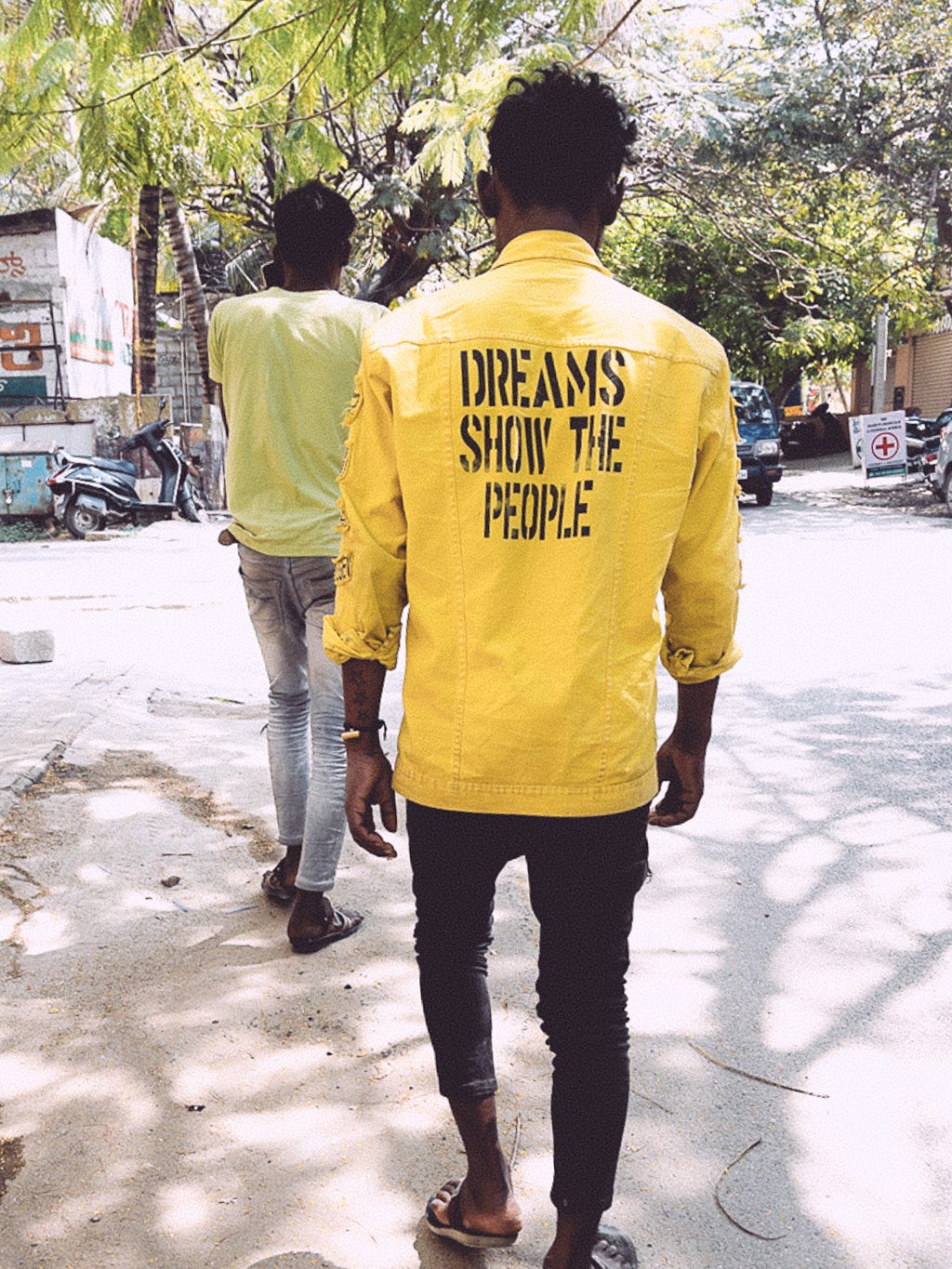
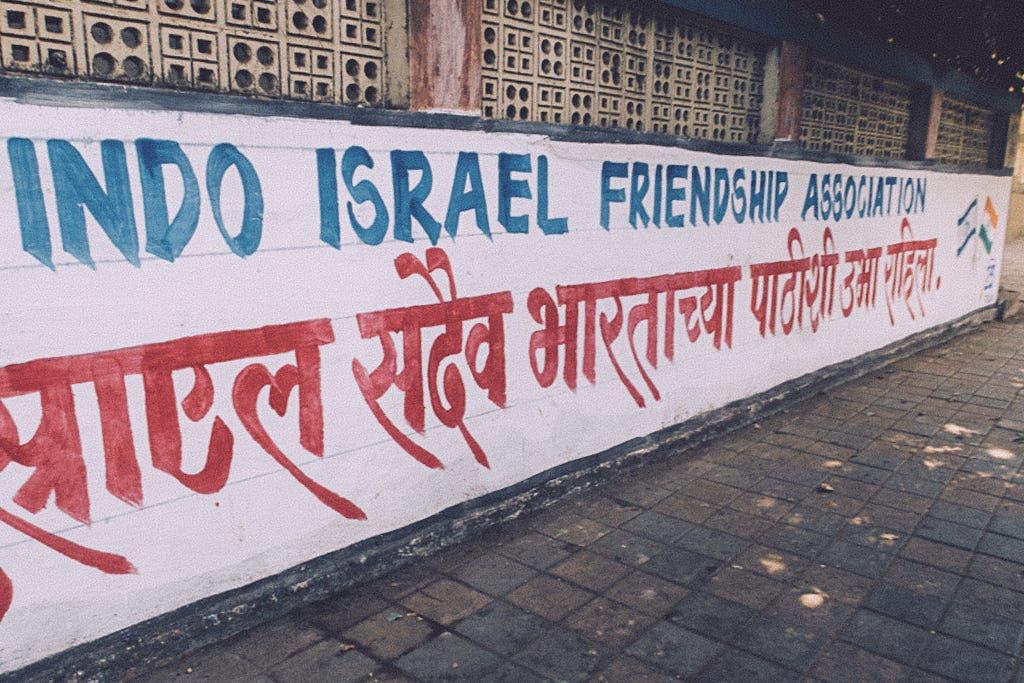
Our peeling walls cry for the cheapest paint, diluted by tears, thickened with the invisible blood of the silenced, or brightened by small joys that momentarily erase troubles in an unequal world.
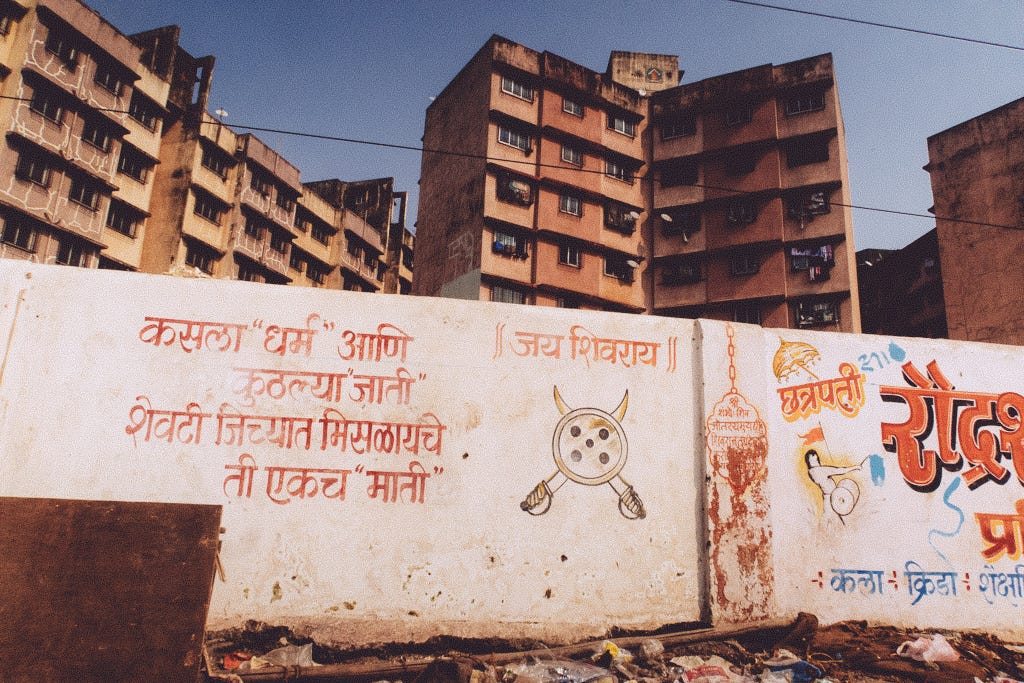
The walls thirst for that red paint, the shade of dried blood that once cried Zindabad to various movements in the 20th century. It emerges from between cheap, single-coloured posters for the latest release at the local tent or touring talkies.
They call for the handwriting of students who stepped out at night with paint to express what their leaders believed in, and they tried hard to believe, decades before the Facebook wall.
Our walls cry for respite from the brightness of cheap LED panels, trying to distract us from the pixels on our mobile screens.
The walls where people could write bloomed on the World Wide Web for a brief moment. The privileged occupied that space. It was hijacked as soon as the masses joined in. And recently, the hijackers of that space, the Big Tech Bros who own the walled garden had the front row when the man they use to bully the world for data privileges, much like the colonial trading companies—was sworn in.
That’s why our walls want to know what the 99% desire in a world where the merchants of the attention economy and the traders control all the algorithms beamed directly into our brains.
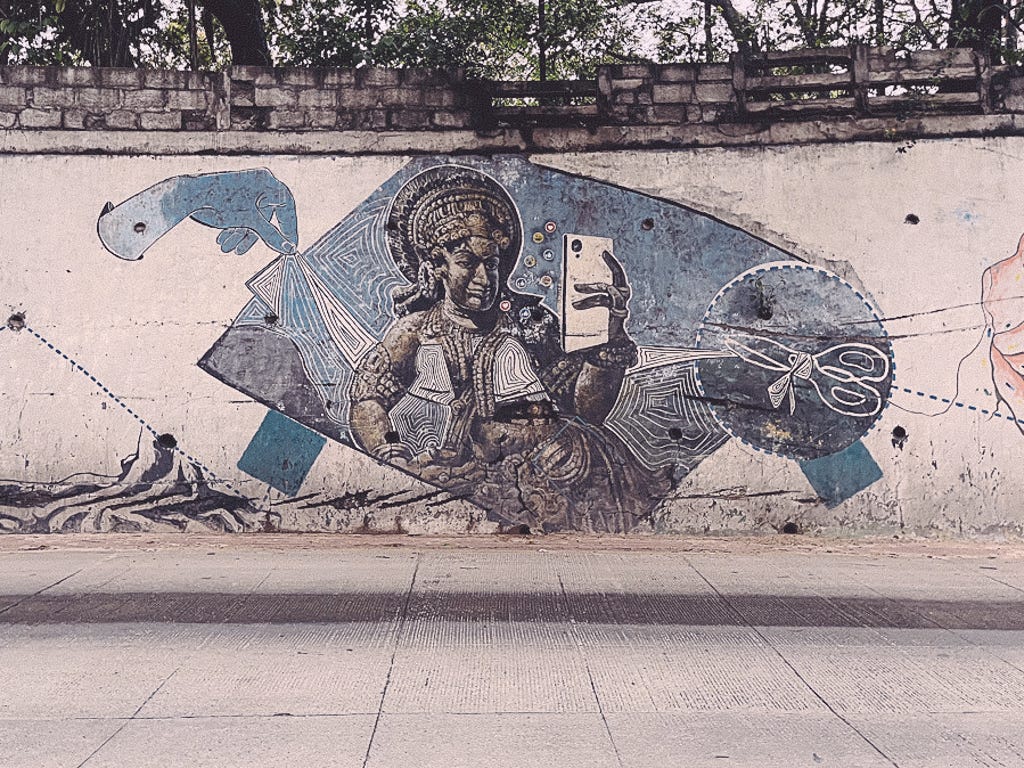
Scrolling the walls of our cities.
Like our mobile screens, our walls can offer endless scrolling, too. However, unlike the 20th-century writing on the wall, where the Dalit Panthers, the Dalita Sangharsha Samiti, student unions of the left or right, or the champions of feminism could write slogans—the messages today are few and far between, and more nuanced.
Vinyl is the new paint.
The needs of the masses are cloaked in advertisements, signage, entrance signs, blackboards, birthday messages, and the hundreds of birthday wishes, festival greetings, and anniversaries of paternalistic figures that communities worship.
Amid this scatterbrained tsunami of images, patterns wait to be noticed. A moment’s pause, a second glance sometimes, that’s all it takes. And once a pattern emerges, the city’s ‘horizontal’ timeline reveals itself.
The city still speaks, but its voice is carefully curated—shaped by commerce, strained by its desperate needs. It speaks not through the ghosts of old words but through the voices of our current needs and aspirations, buried beneath layers of vinyl, beneath peeling paint, beneath screens that flash and fade.
In order to not be mute,
you must begin by not being deaf.
Eduardo Galeano
To start this week’s photo essay, here is a photograph of the clotted blood-red colour from the 20th Century.
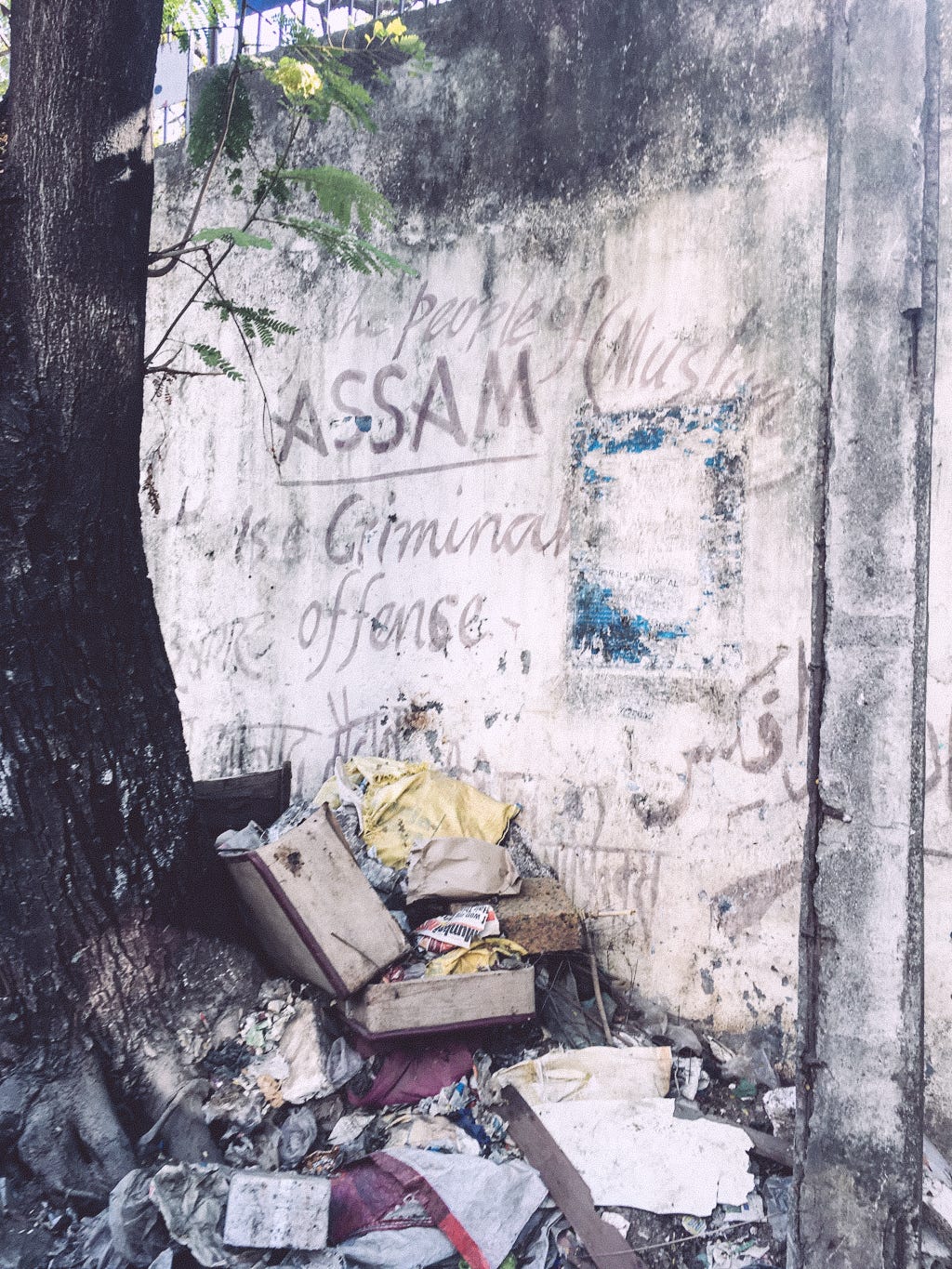
Perhaps reading the writing on the walls is its own form of education, a window into the many currents of thought, movements, and happenings shaping society.
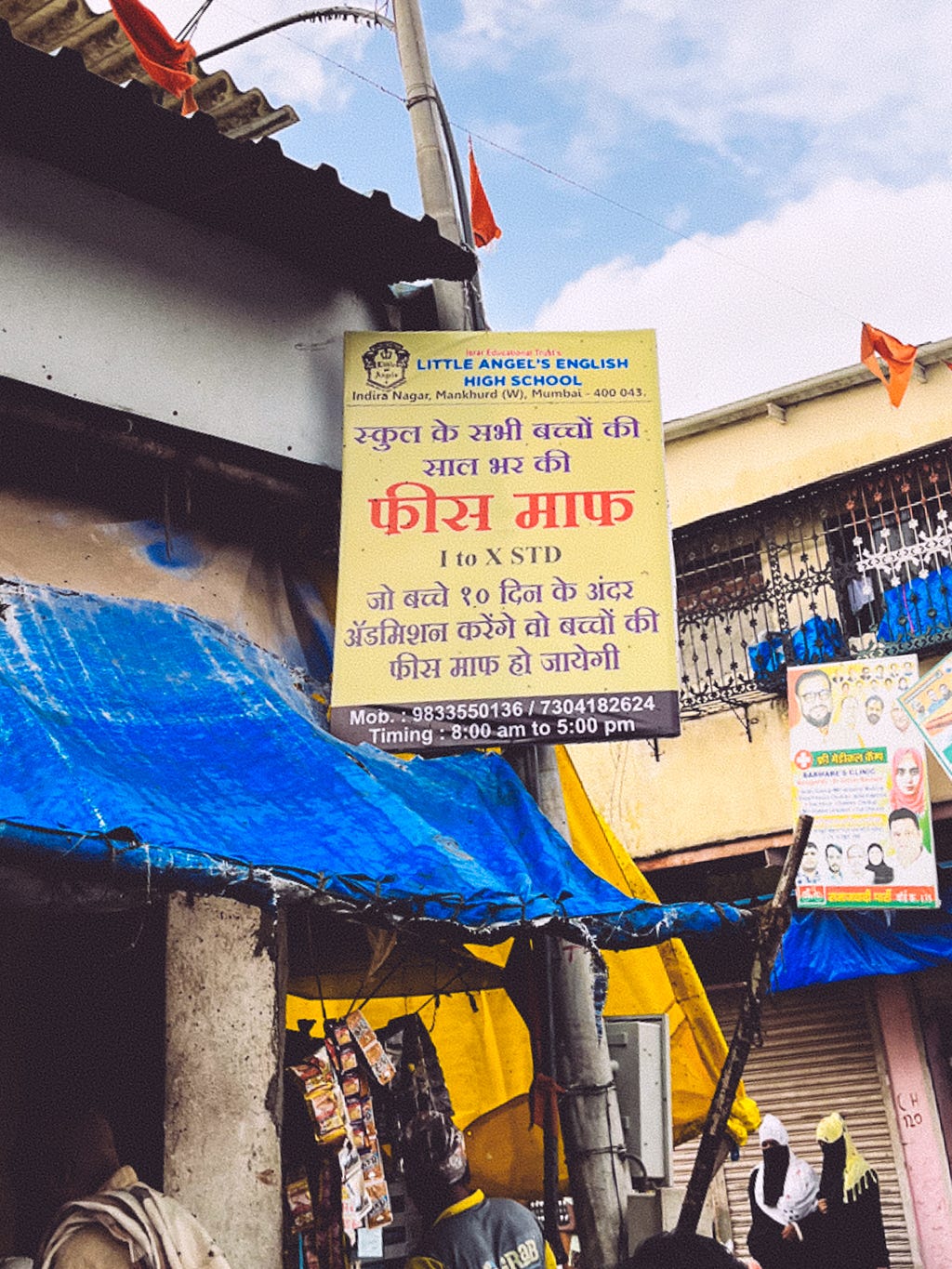
This was a poster from Mankhurd towards the end of the pandemic.
‘Fees Forgiven’ for those who did not pay fees that year.
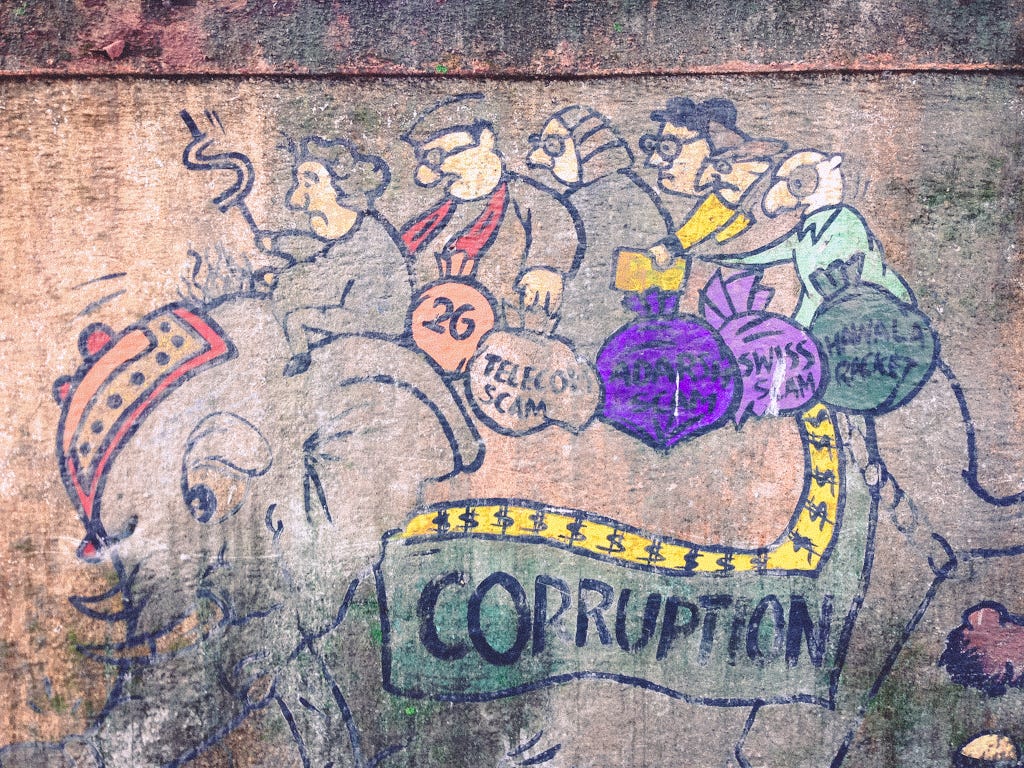
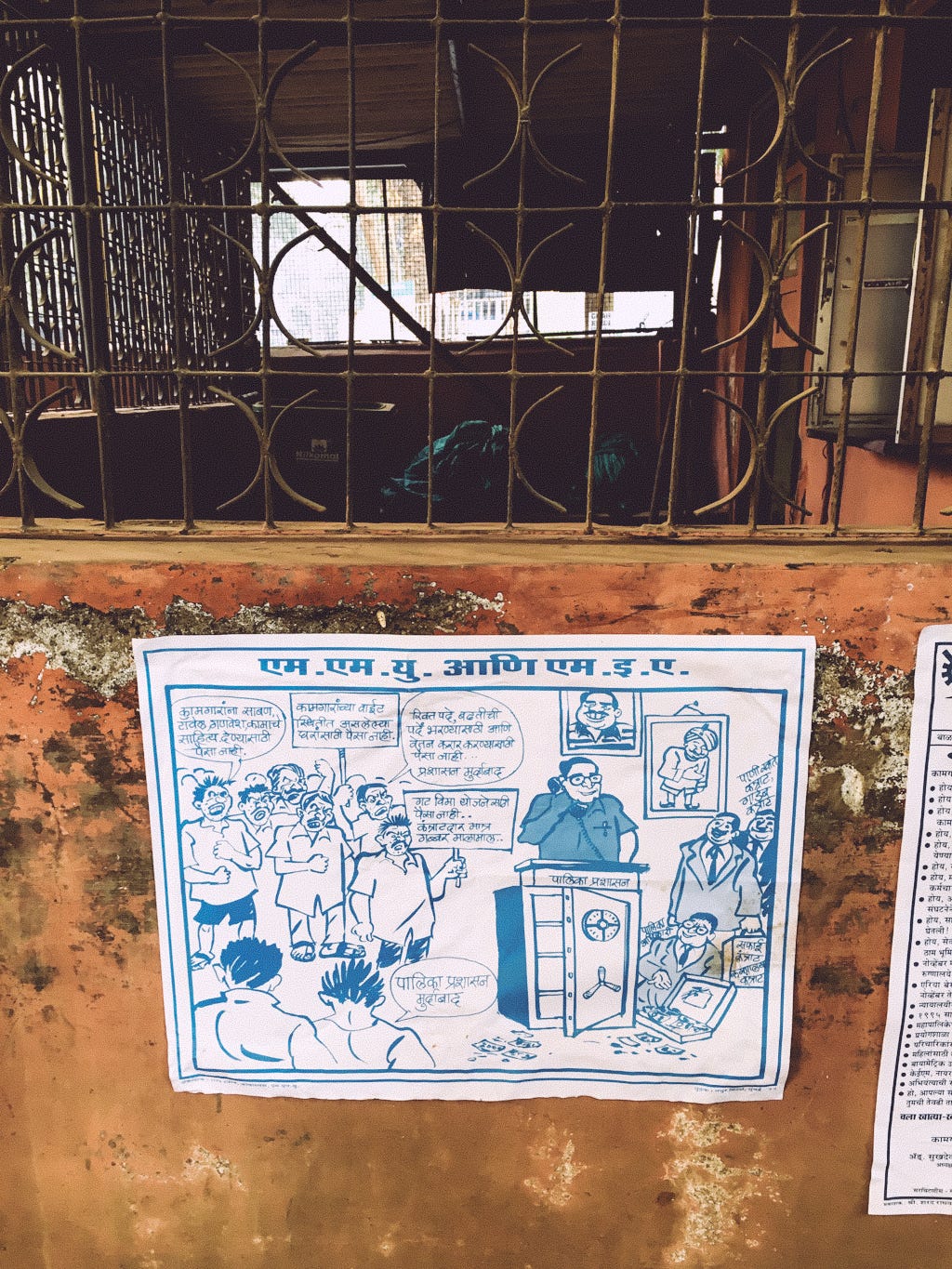
A protest cartoon on the walls of South Mumbai reminds us of the 20th century - the age of labour. In those days, walls were painted. Now, it’s easier to print and stick posters or hang banners.
A poster from another big protest in recent times - the women of Mumbai Bagh- was inspired by the Shaheen Bagh protests against NRC/CAA.
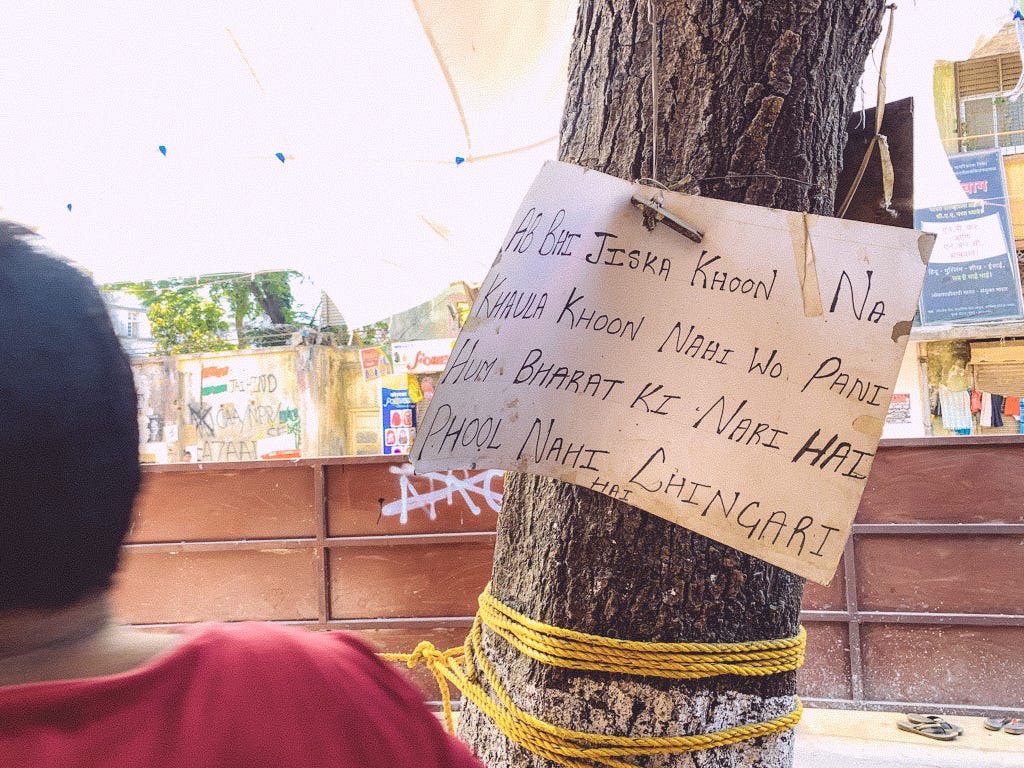
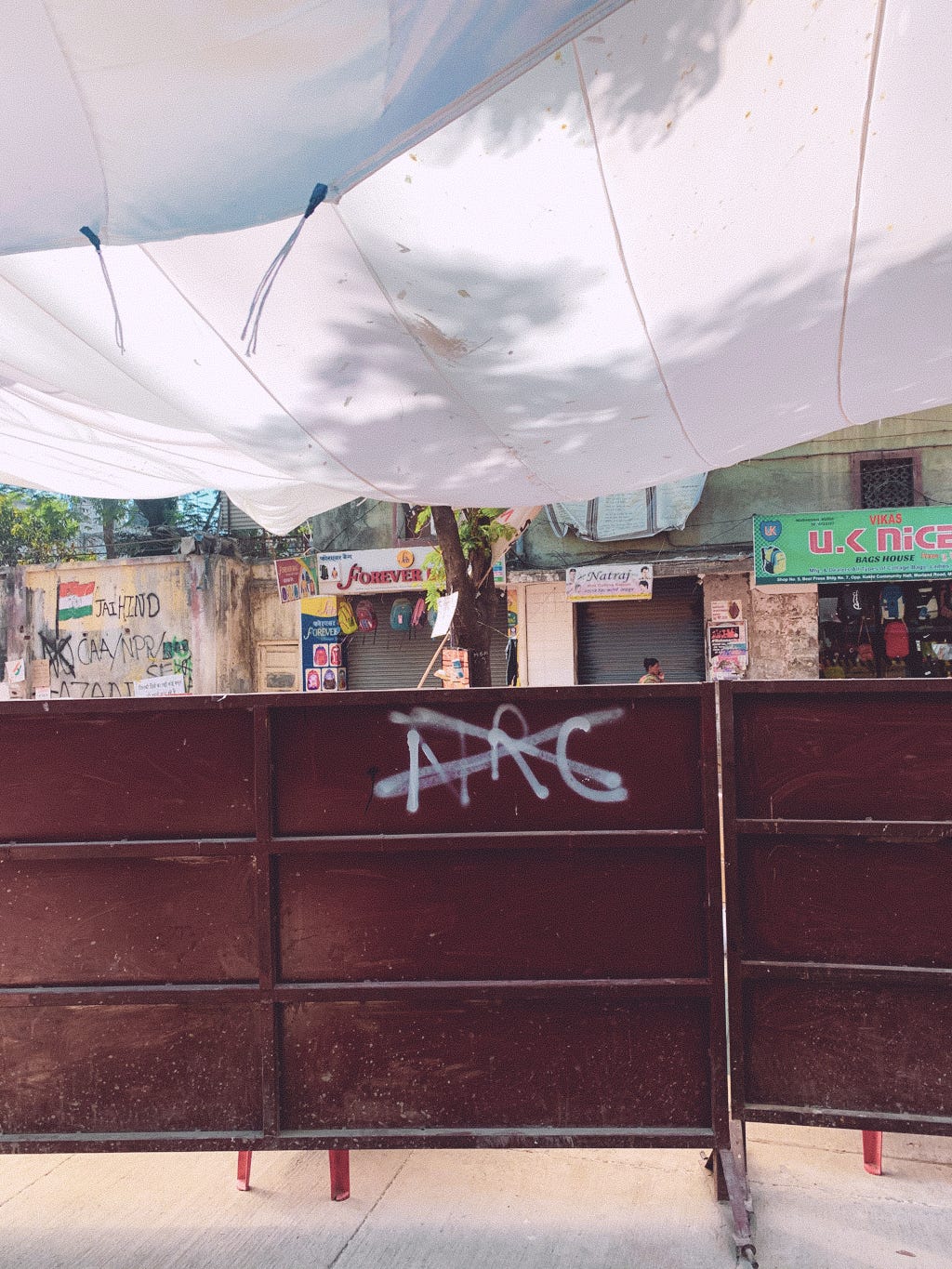
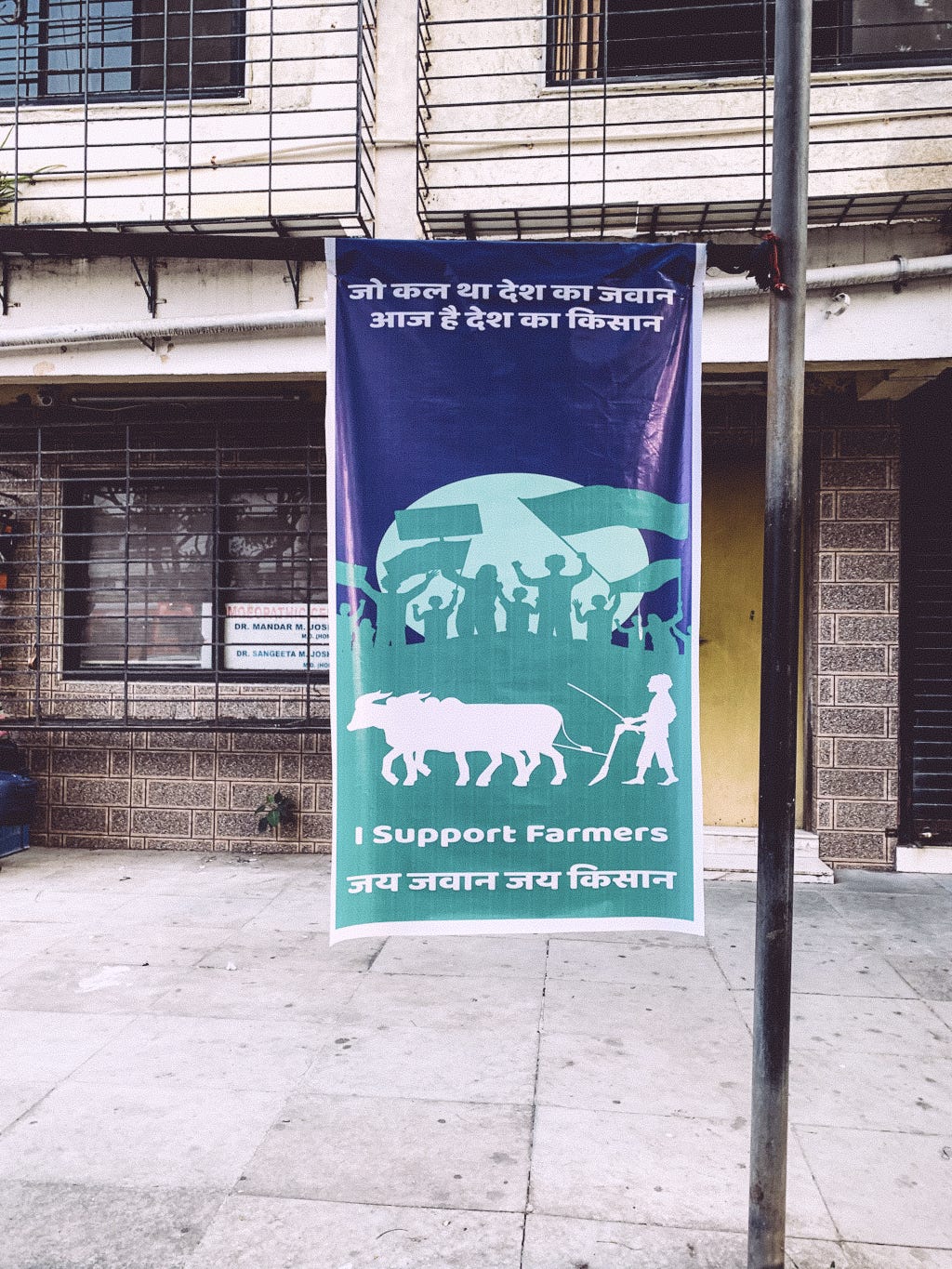
Protests from other parts of India echo on Mumbai's walls. For example, here is a poster supporting the Farmers’ Protests in Punjab, Uttar Pradesh, and Haryana near APMC in Navi Mumbai.
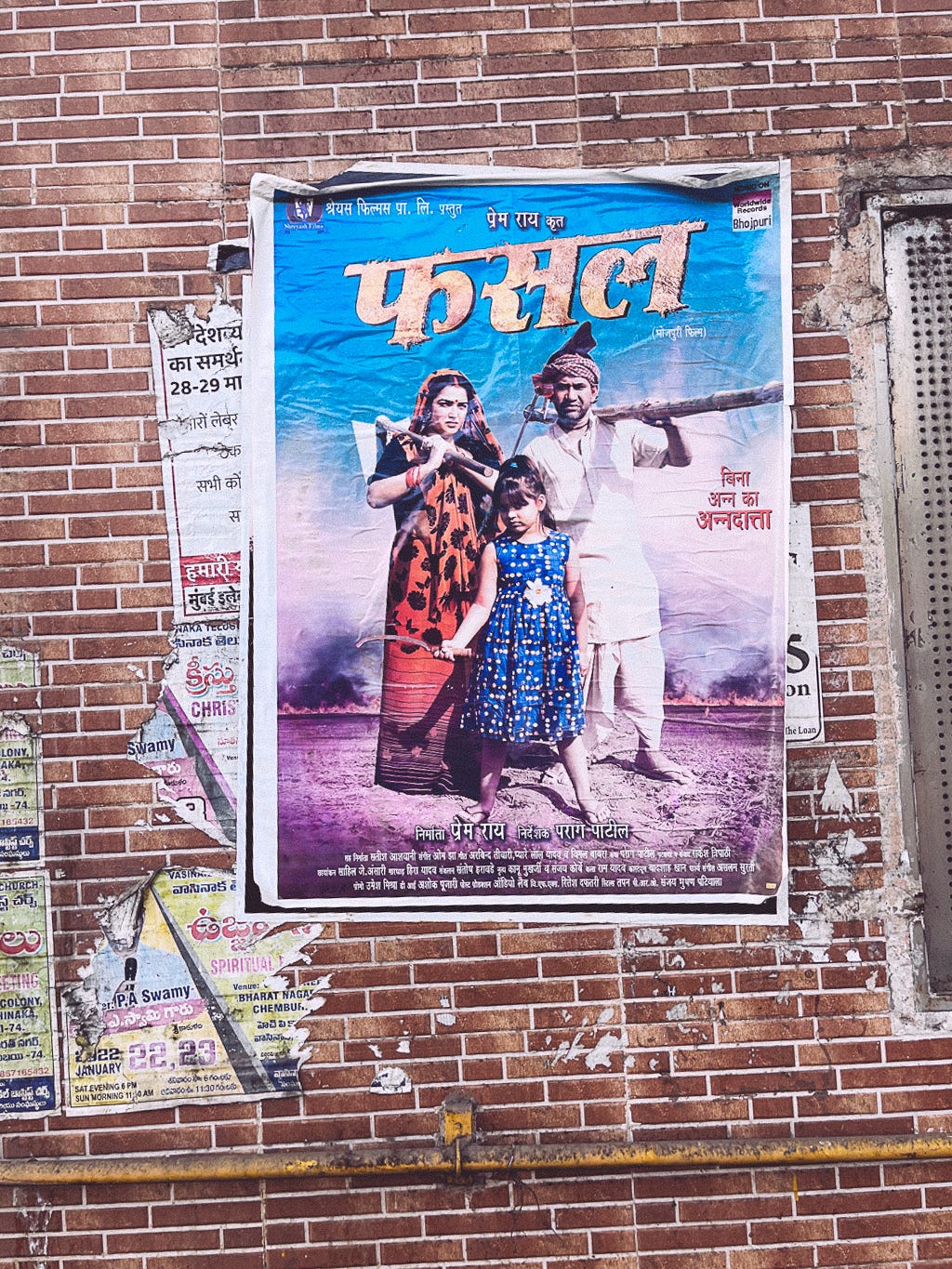
And a movie about the same event.
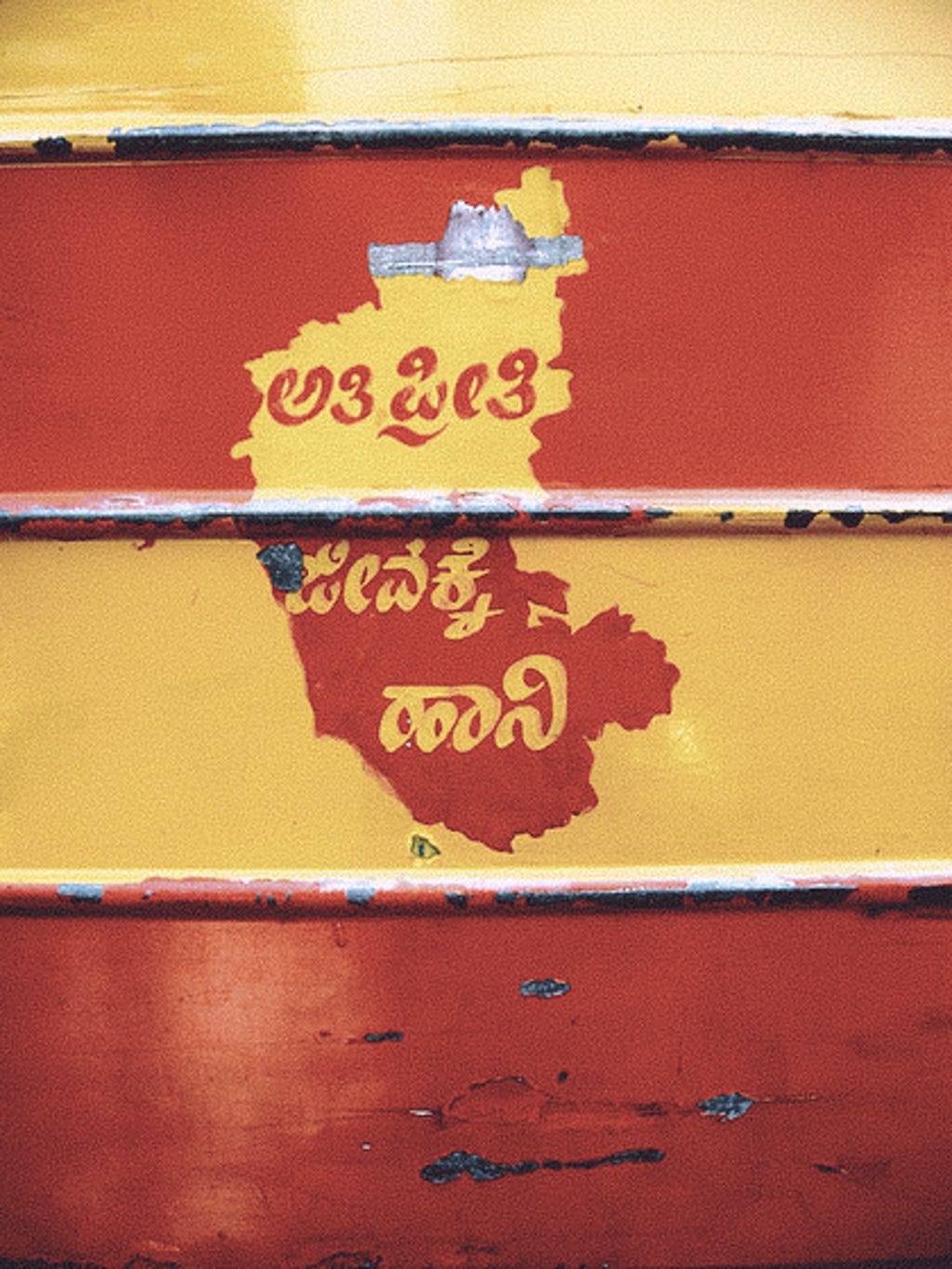
The following message was on Kamraj Road in Bangalore, right next to the cantonment:
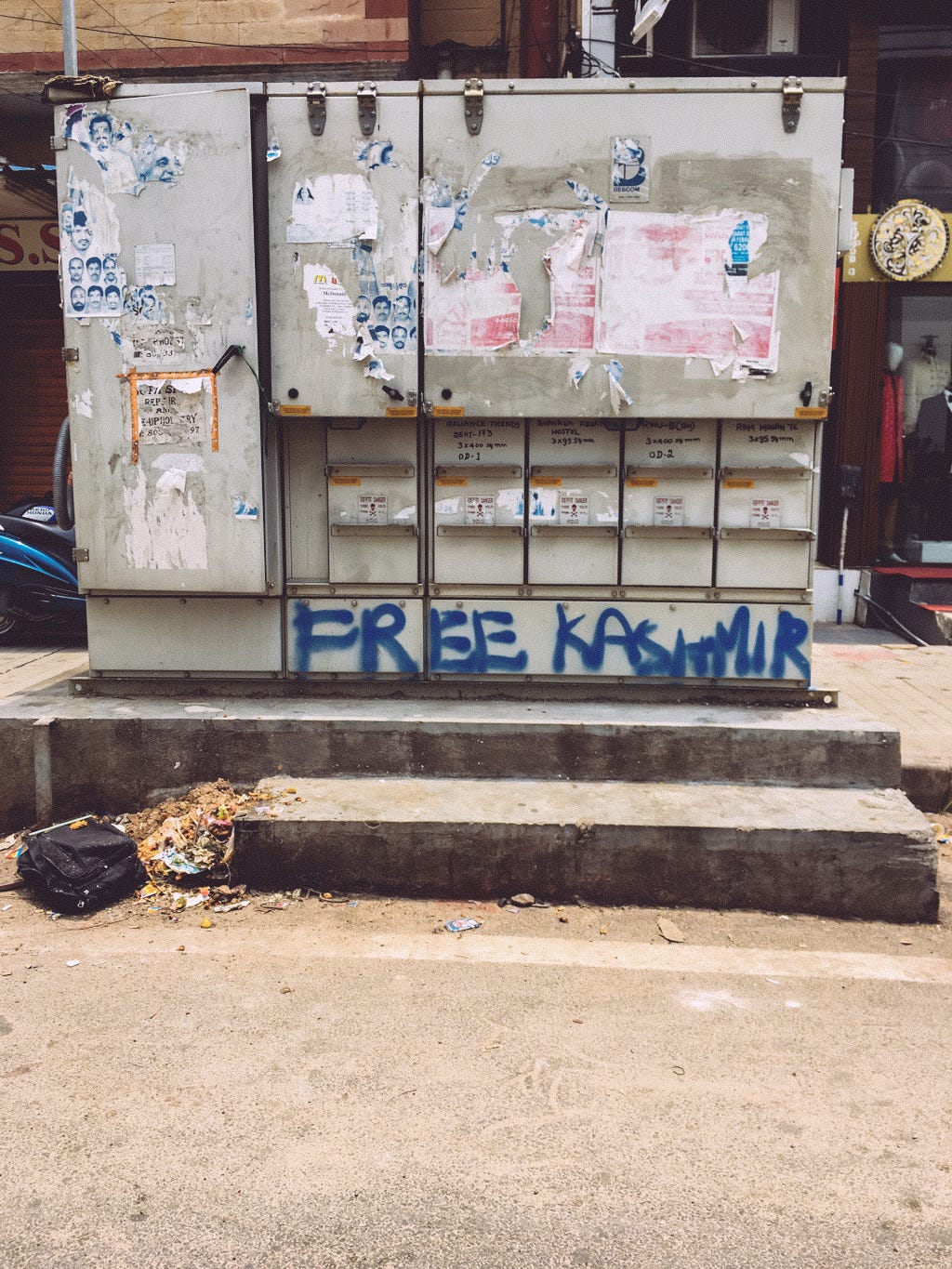
Note:
I am not sharing images from the Dalit Movement here because I have already done a photo essay called Looking Through Walls.
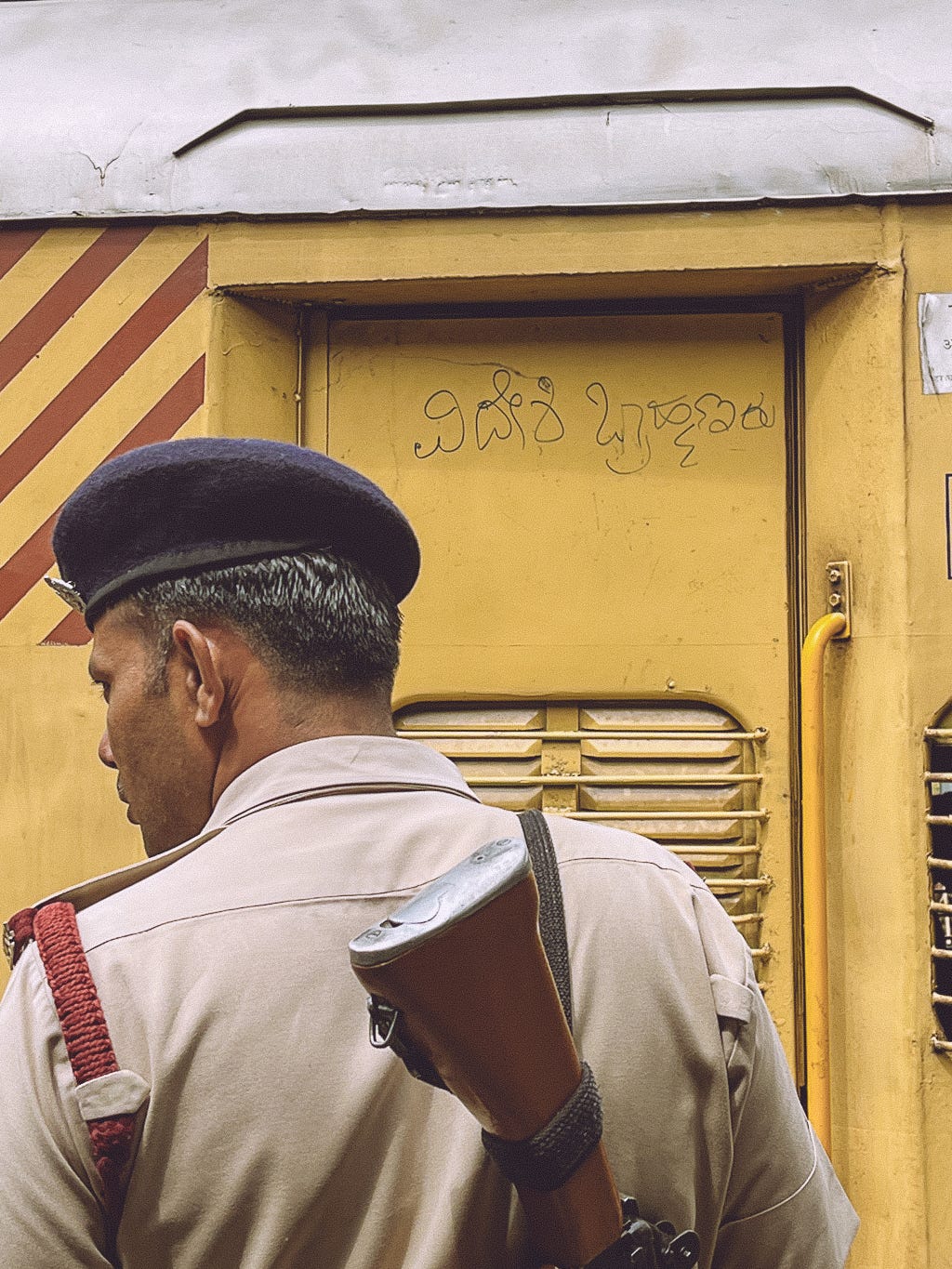
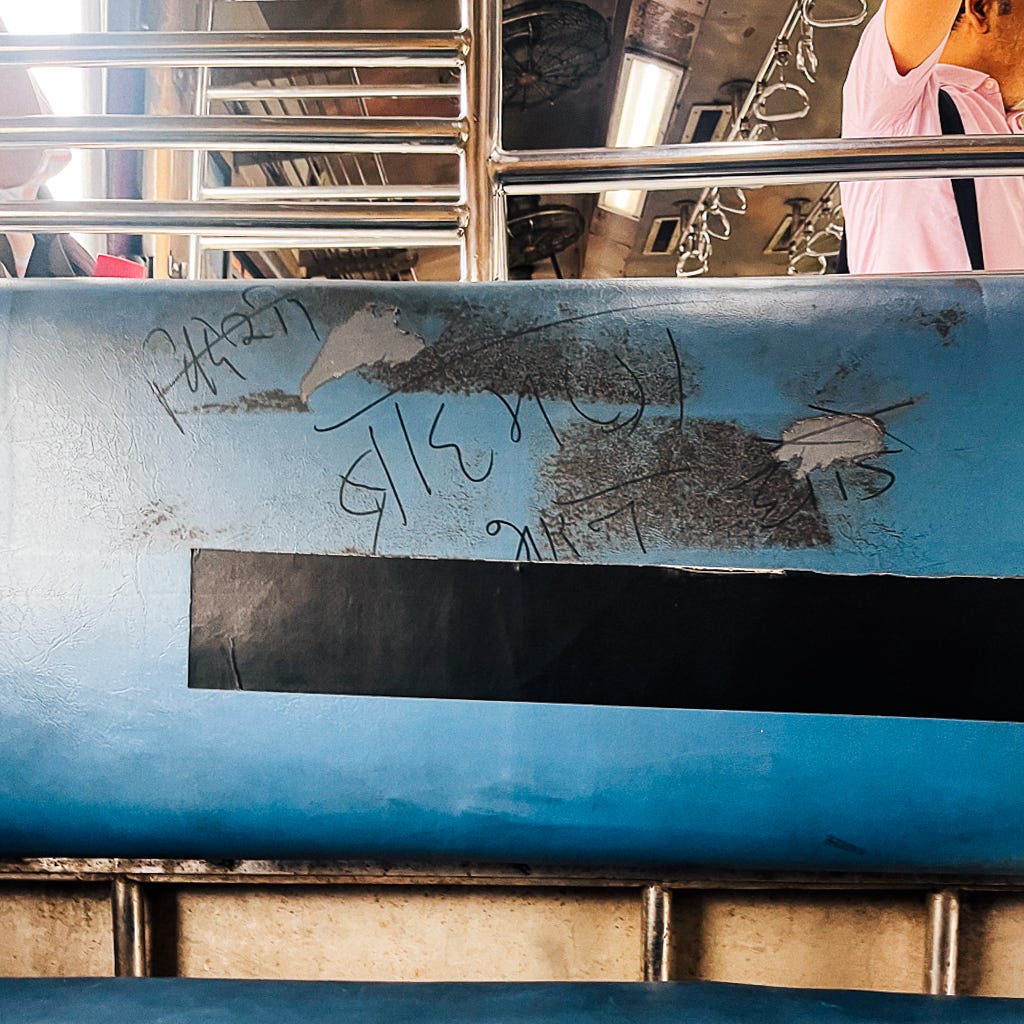
However, here is a message that I have seen in Bangalore and Mumbai. It’s from a group of Indigenous communities that says - Brahmins are Foreigners. Leave India.
The long tail of the labour and peasant movements
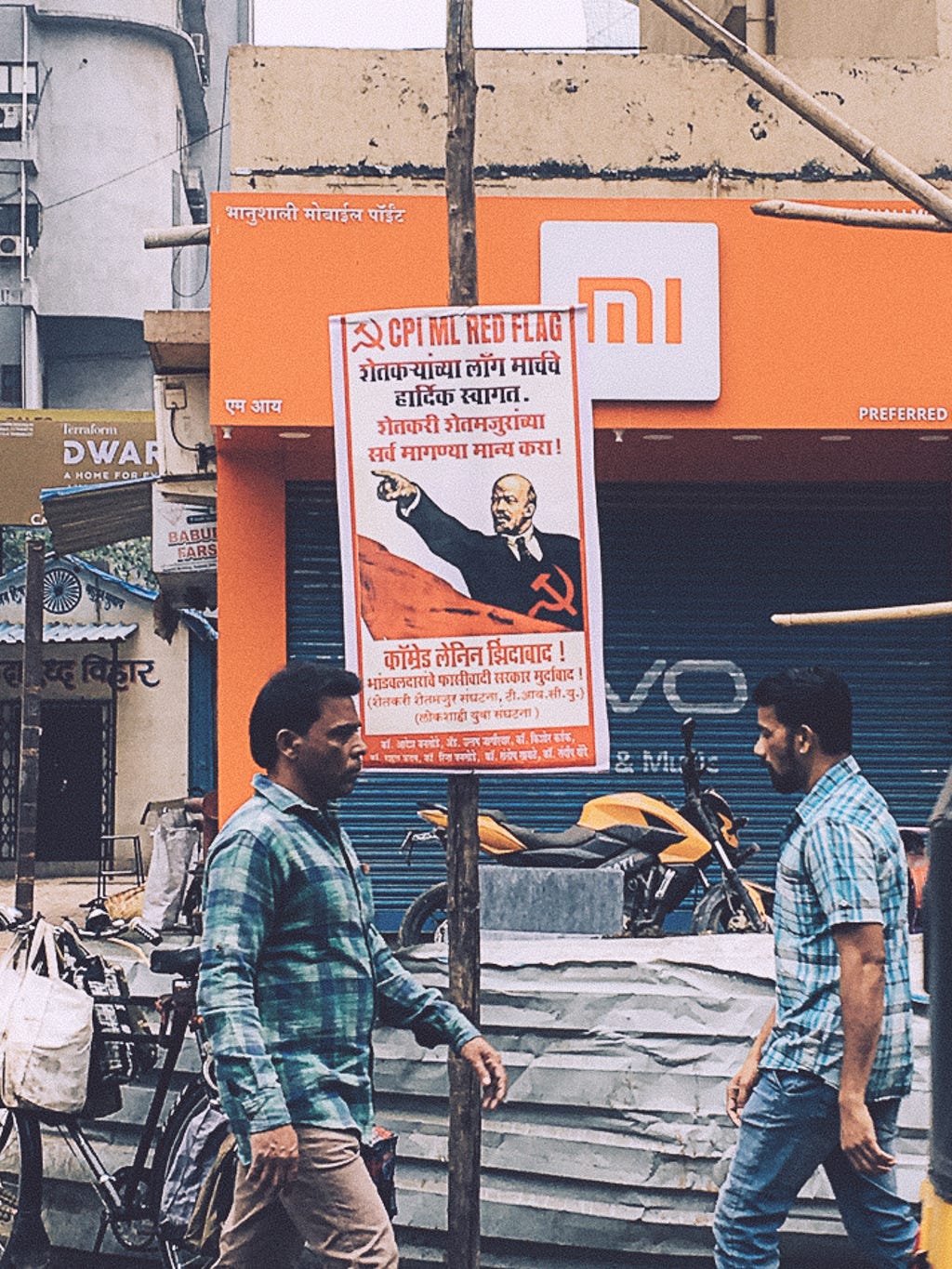
This poster says "Farmer’s Long March" (it happened from Palghar to Mumbai and was organised by the CPI -Marxist Leninist). It was posted on a high-footfall pedestrian path in Ghatkopar East, outside the railway station.
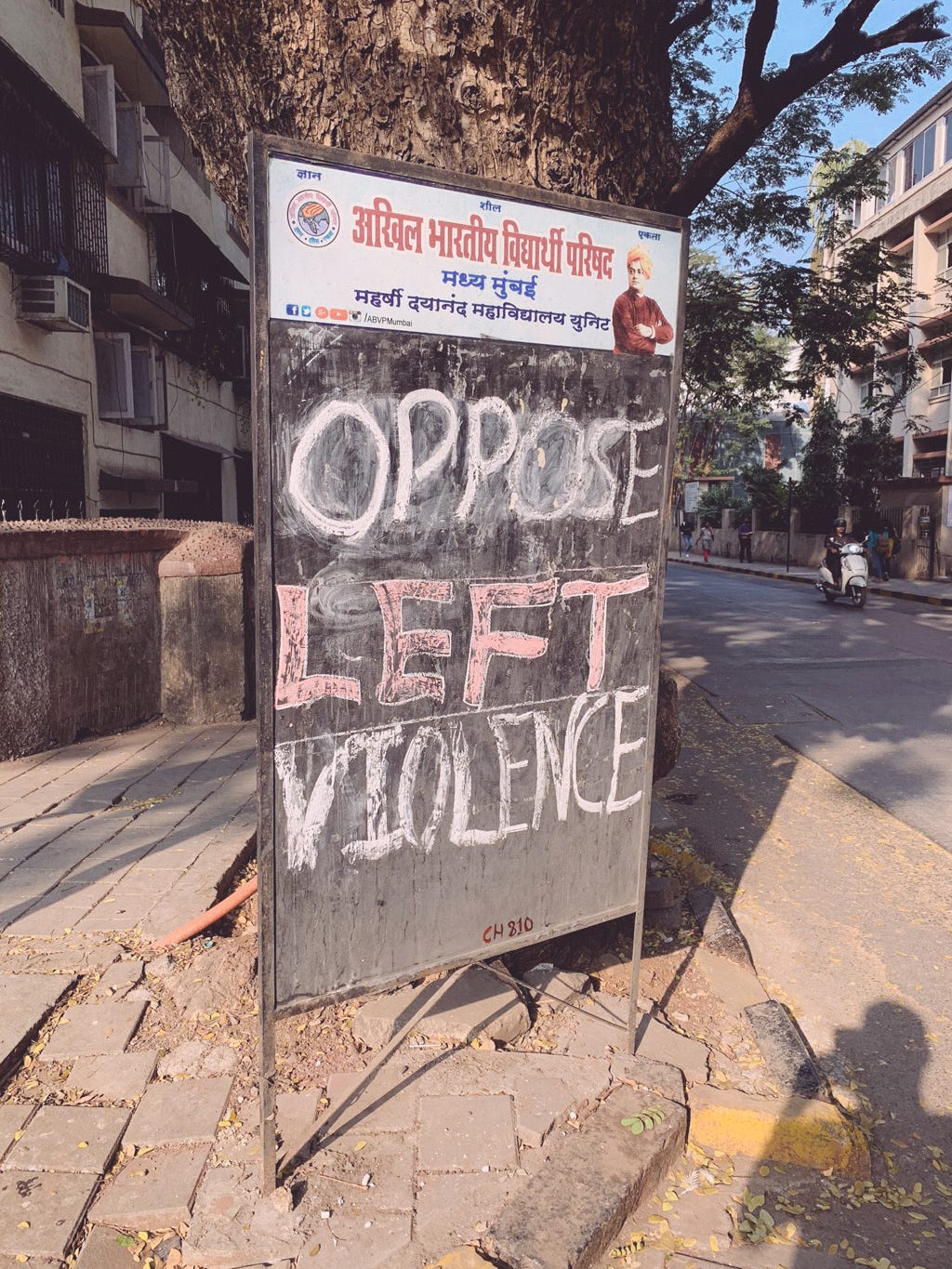
And here’s communism reimagined post-2014 from a Hindutva-inspired right-wing student union.
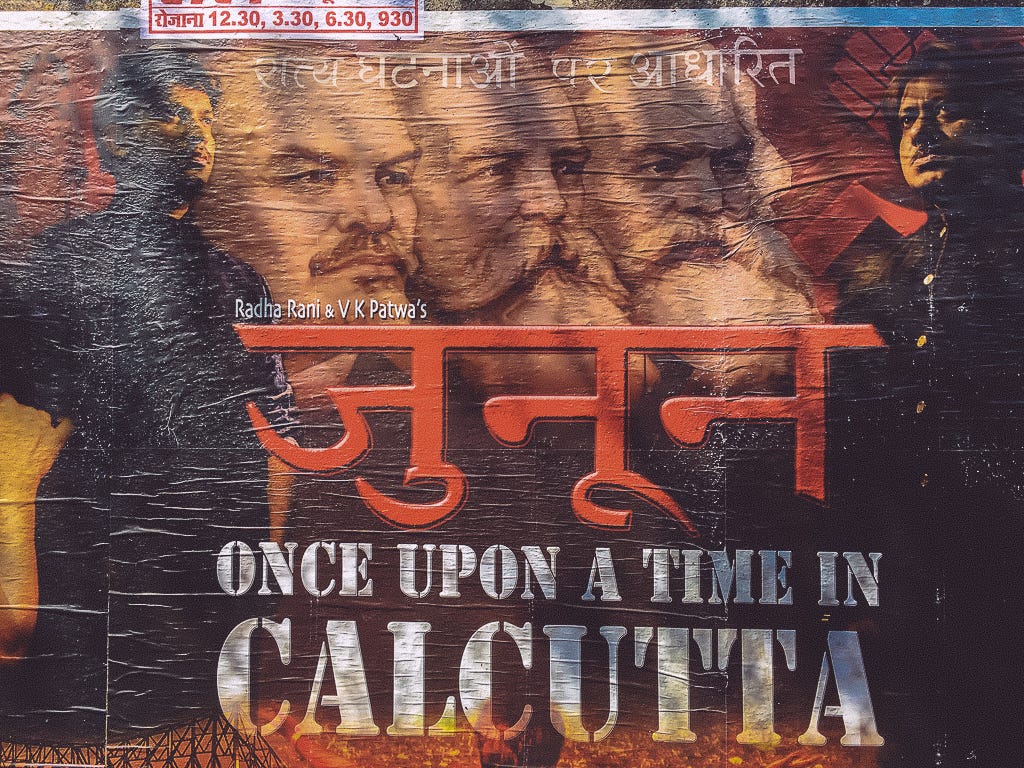
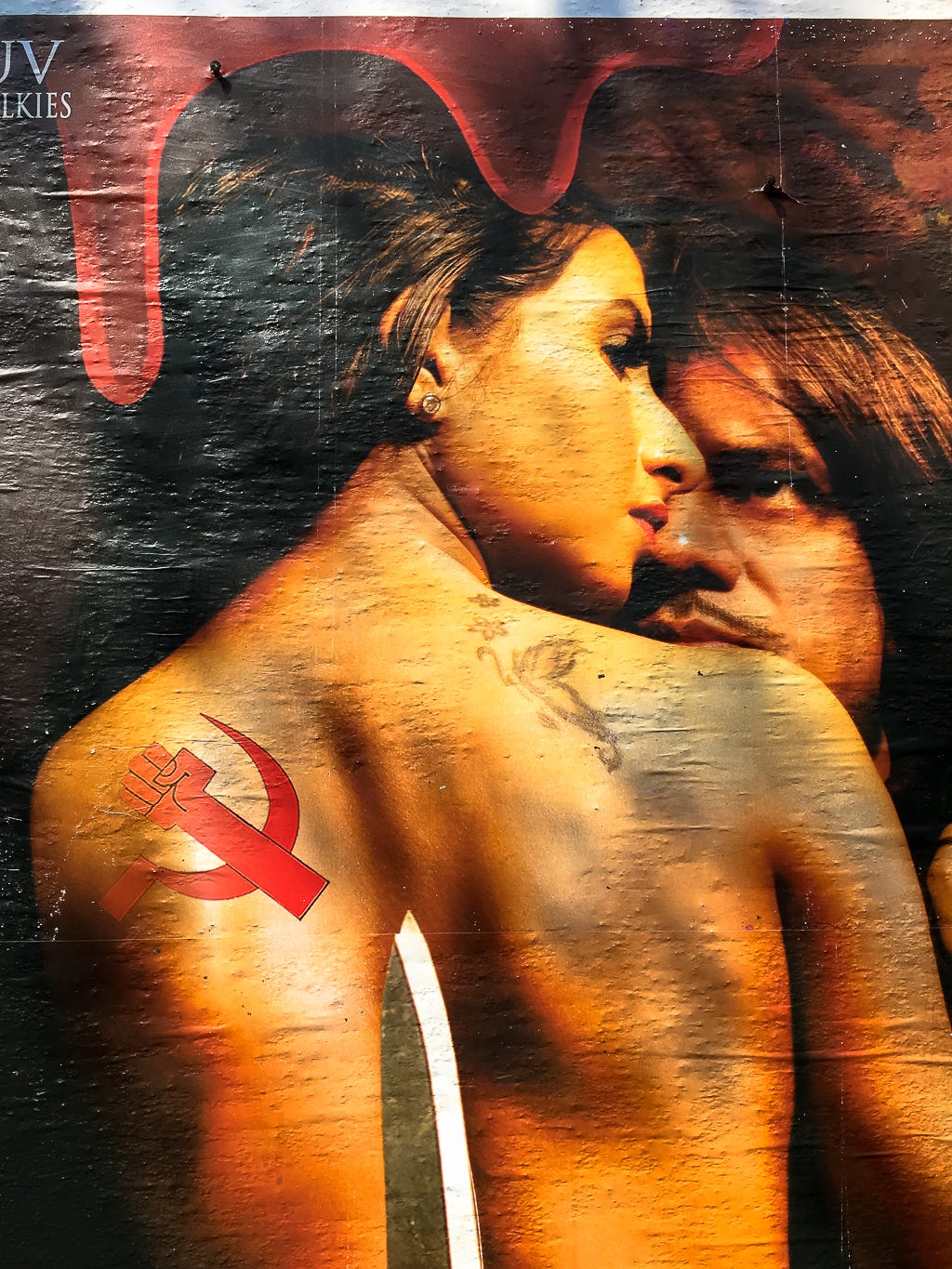
And a movie about the dangers of communism.
The Turn Right.
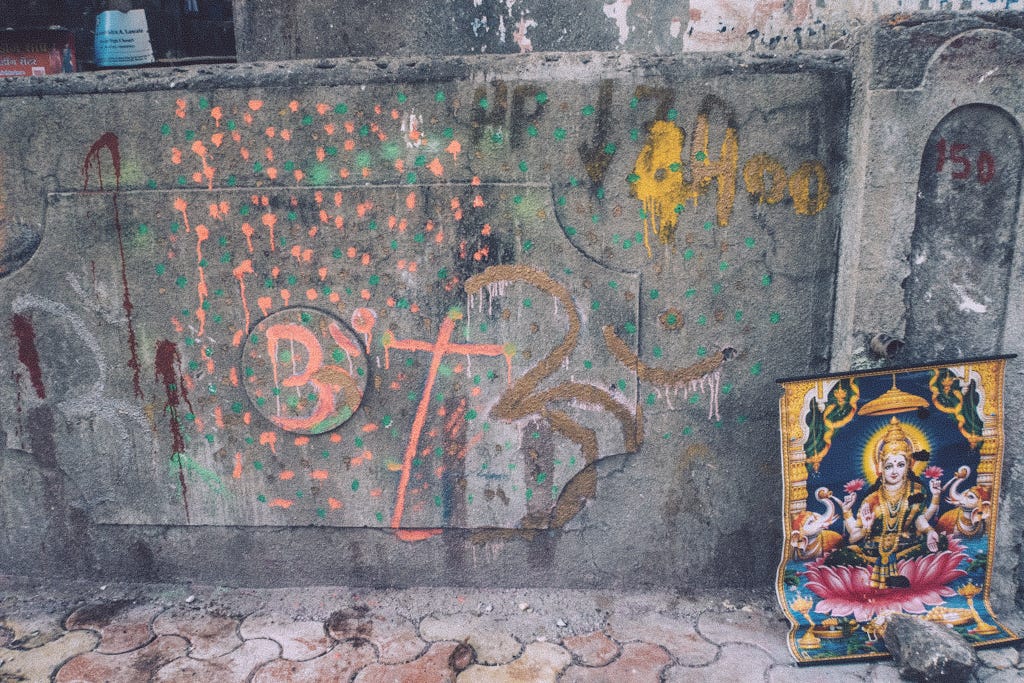
Over time and this century, the messages on the walls and in public places have changed. Organised labour movements seem to have weakened, and communal and community mobilisation have filled the void they left behind. While workers’ rights and related demands would have been loudest in the 20th Century, this century is about identity and groups demanding rights and projecting power.
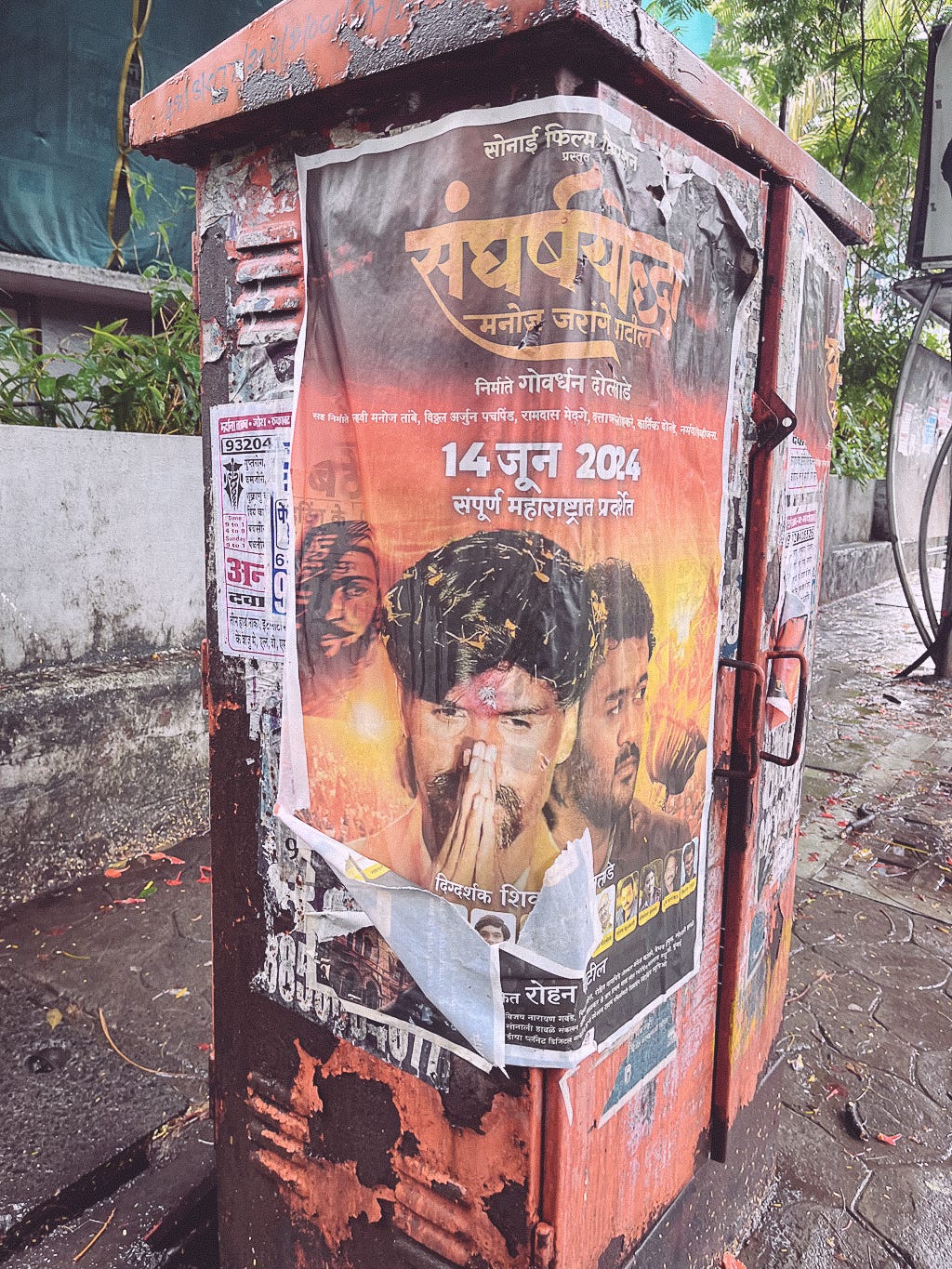
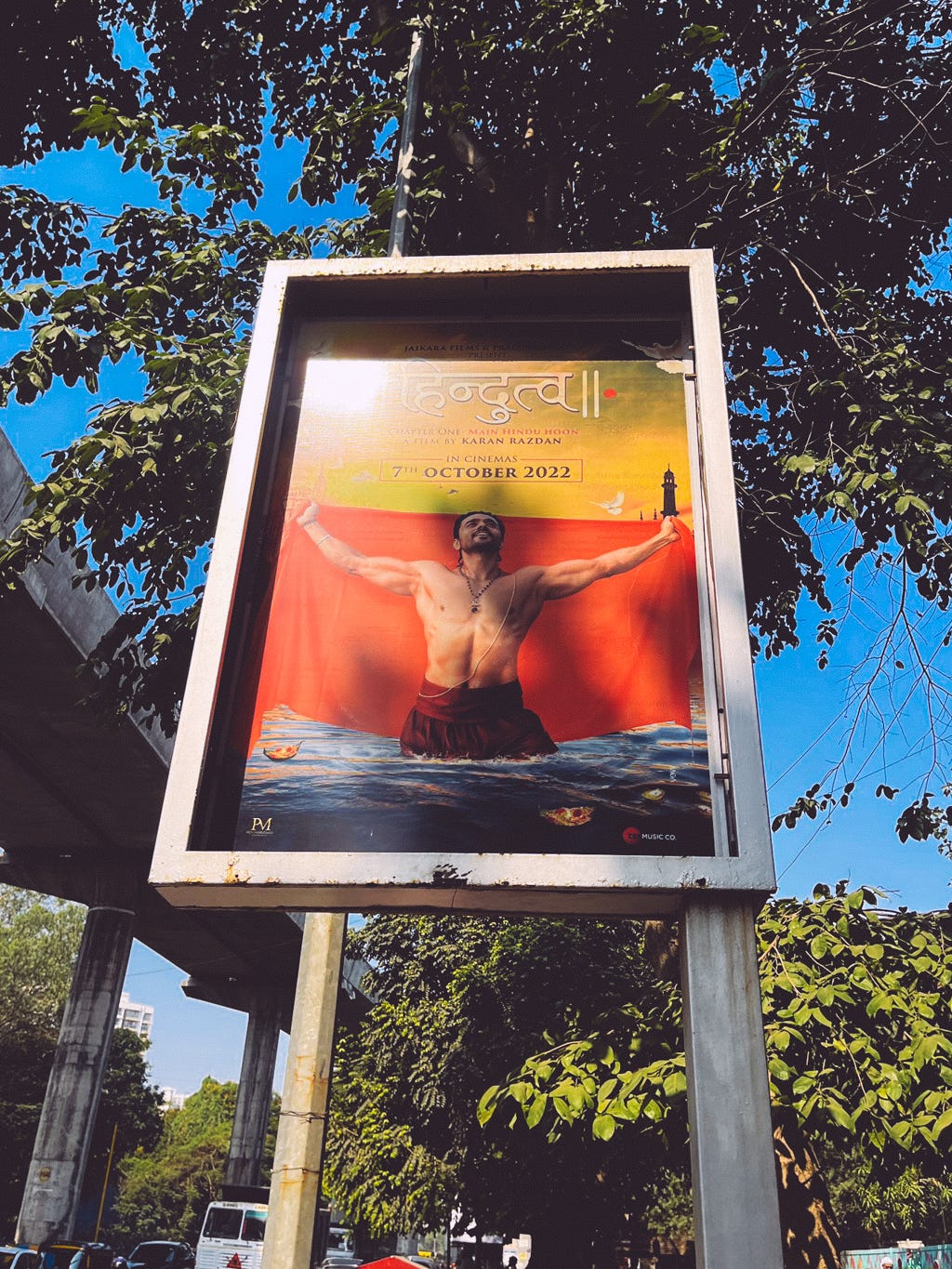
Before the 2019 elections, the right-wing content creators made movies about the Triple Talaq law as part of the election campaign for BJP. The poorly made movies were essentially an excuse to plaster streets with posters.


This was a signature campaign to protect Muslim Personal Law.
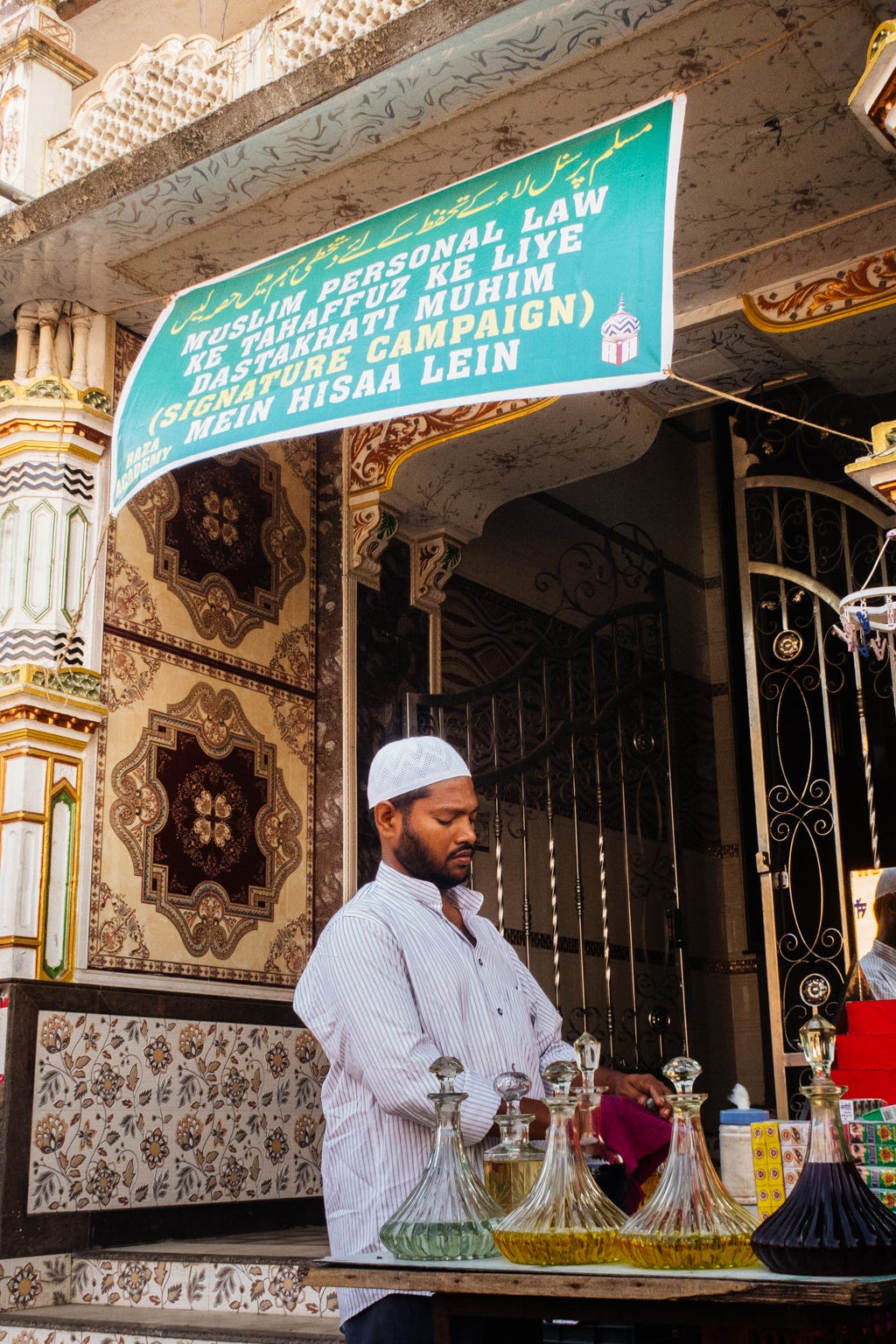
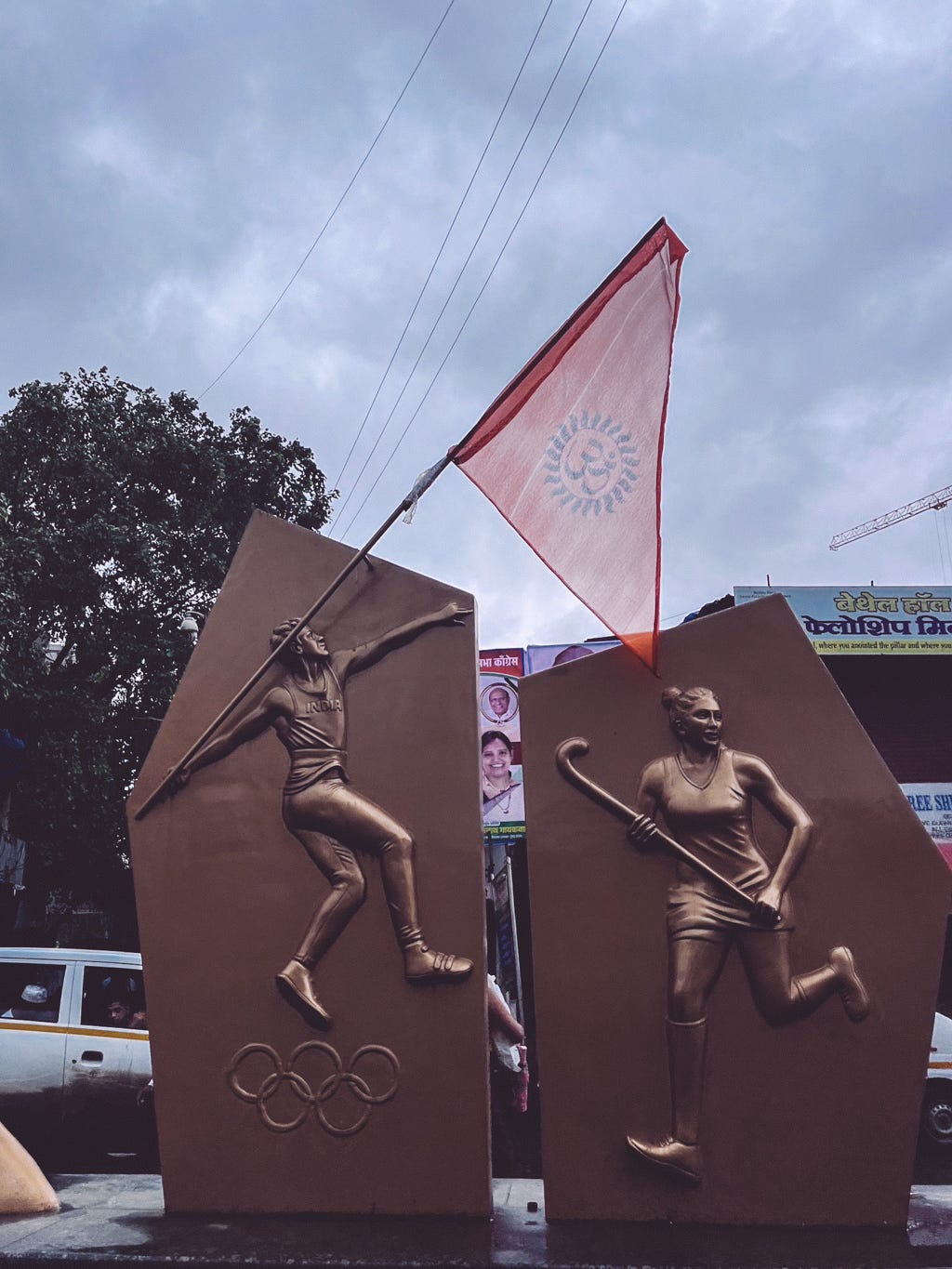
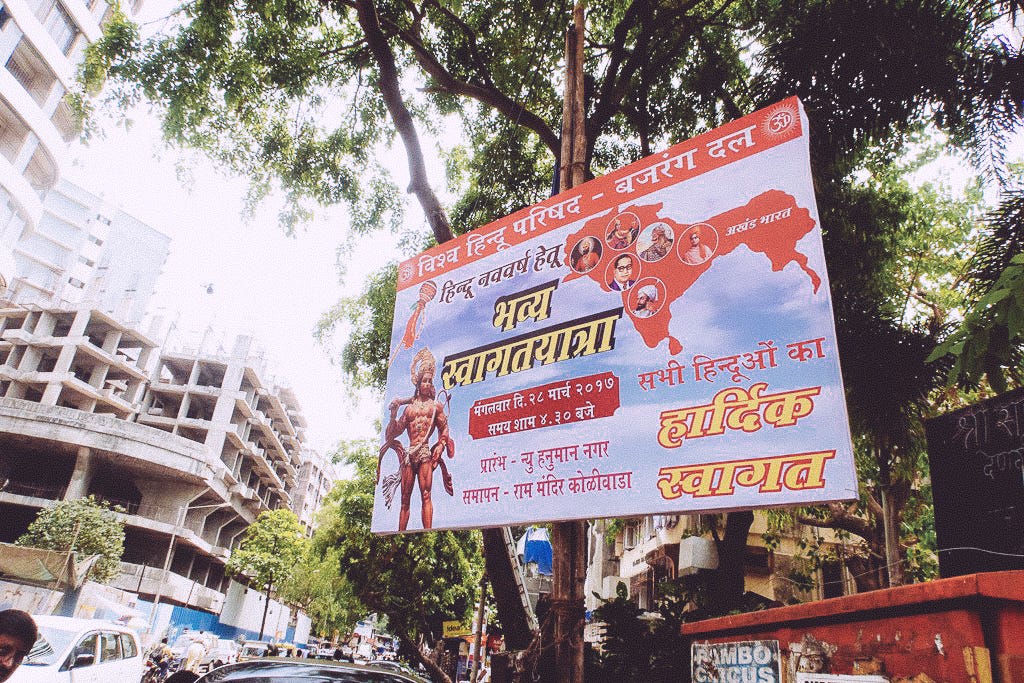
Scrolling through the streets like a living timeline, it’s clear that the colour palette has shifted to various shades of saffron. Each hue carries messages that reveal the inward-looking mindsets behind it. Their actions reflect a paradox: a deep-seated fear of the interconnected world yet a willingness to wield its tools—the World Wide Web and social media platforms. And their messaging echoes on the streets.
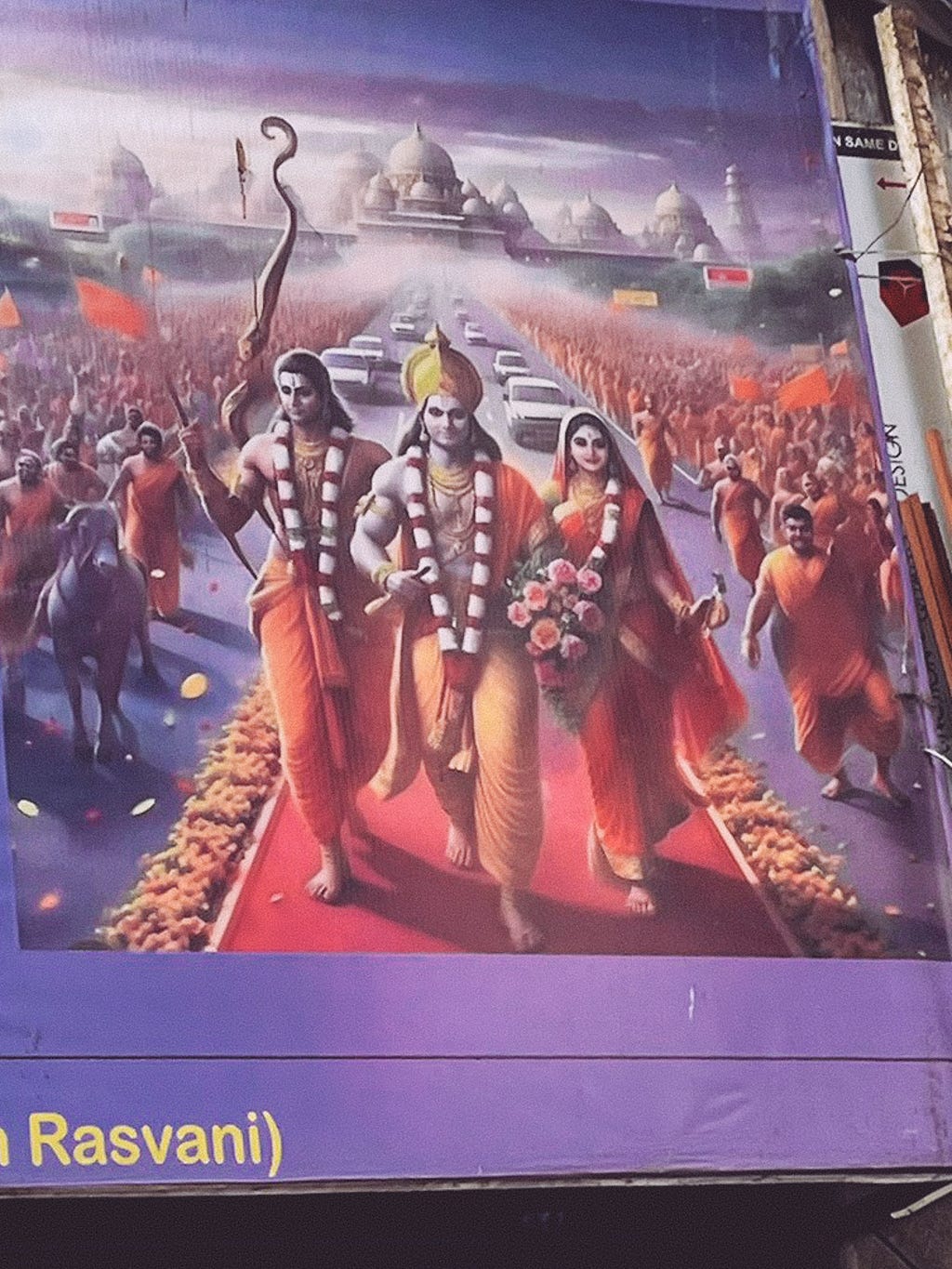
An AI-generated image of the Rajpath in New Delhi with a saffron twist from Kings Circle, Matunga, a dominant/oppressor caste neighbourhood in Mumbai.
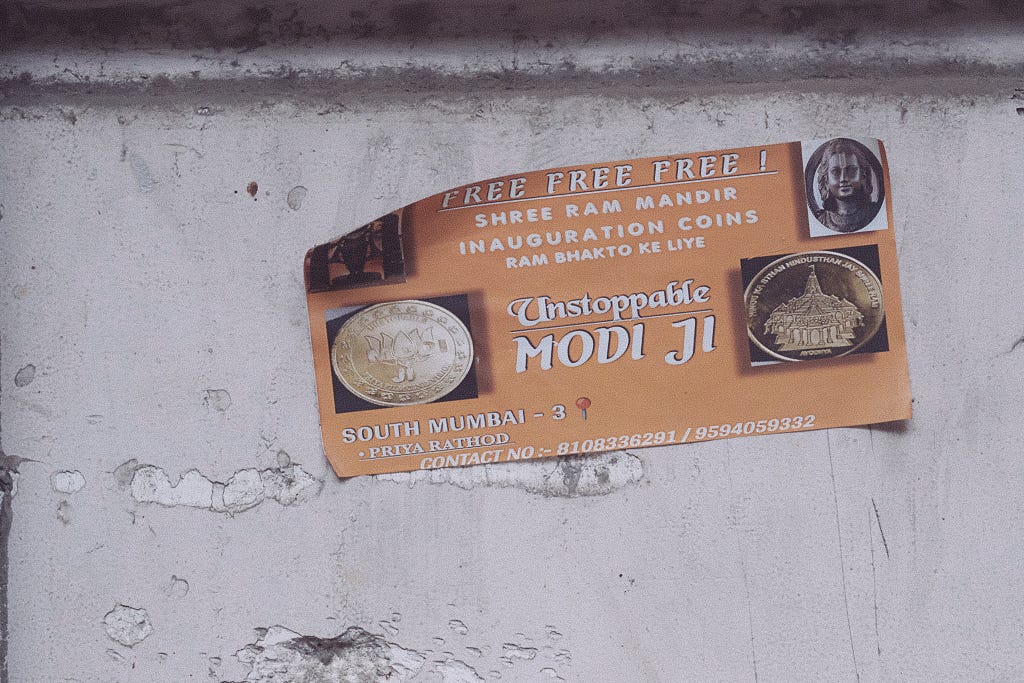
Shades of saffron being celebrated in January 2024 on the day the pet project of the Hindutva right, the Ram temple, built after demolishing the Babri Mosque, was inaugurated ahead of the elections that year.
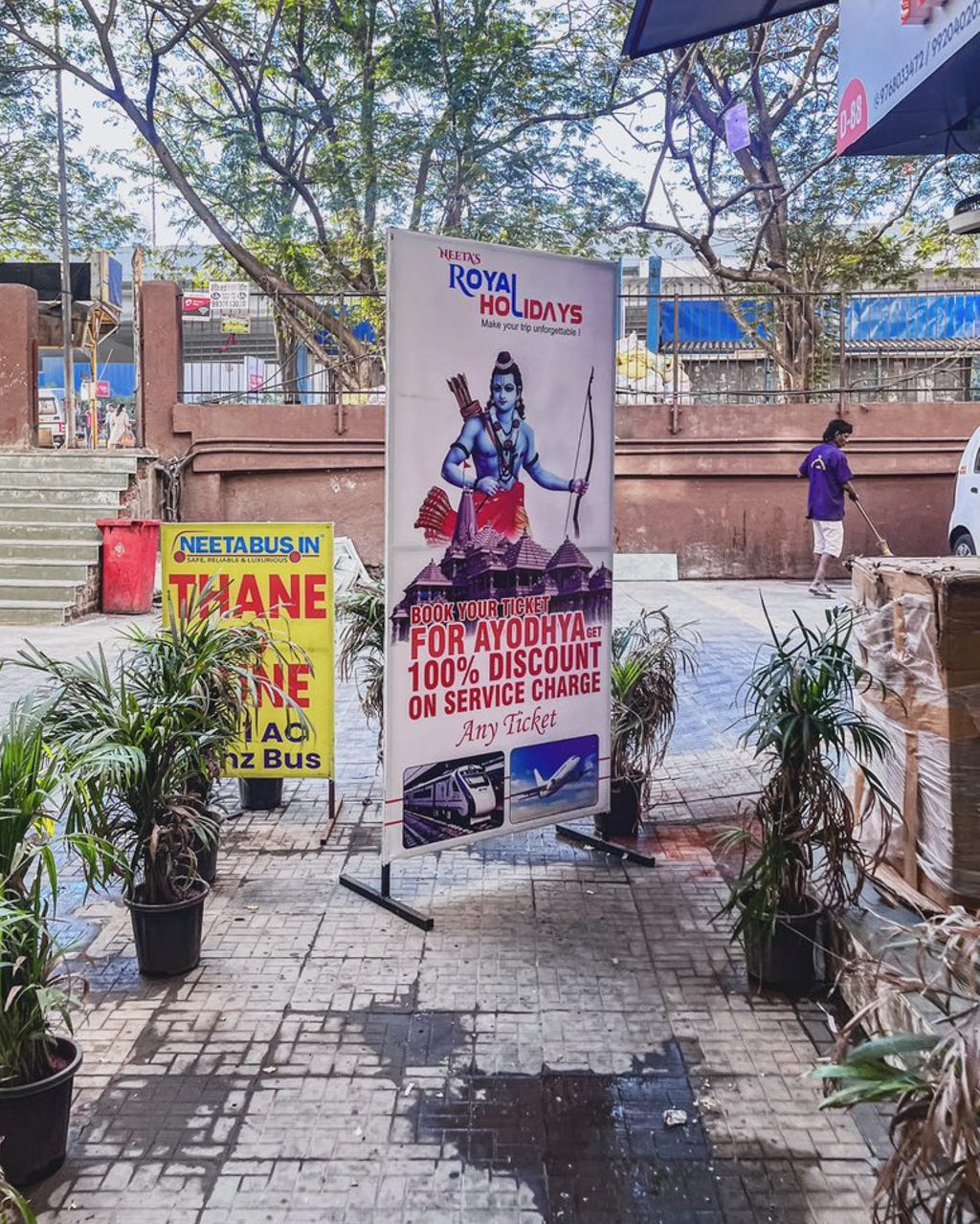
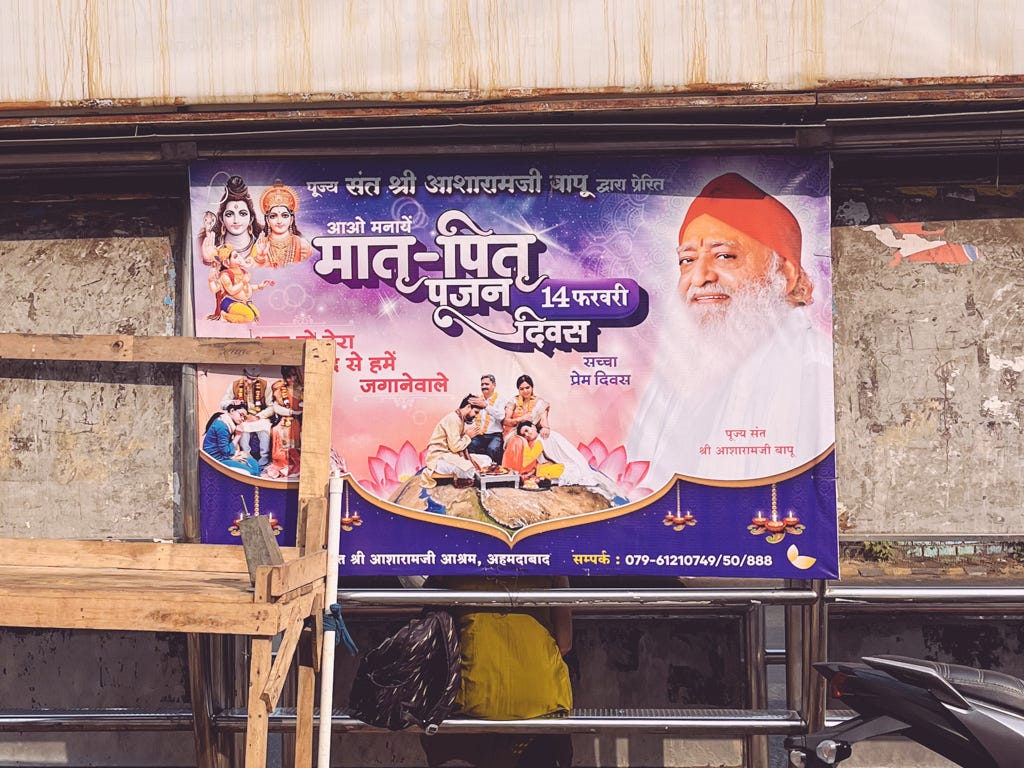
Shades of saffron include this godman, who reveals a fear of all sectarian and communal groups—the fear of women discovering that they have agency and that men like them are losing control. This group observes Valentine’s Day as Mother-Father Worship Day and True Love Day.
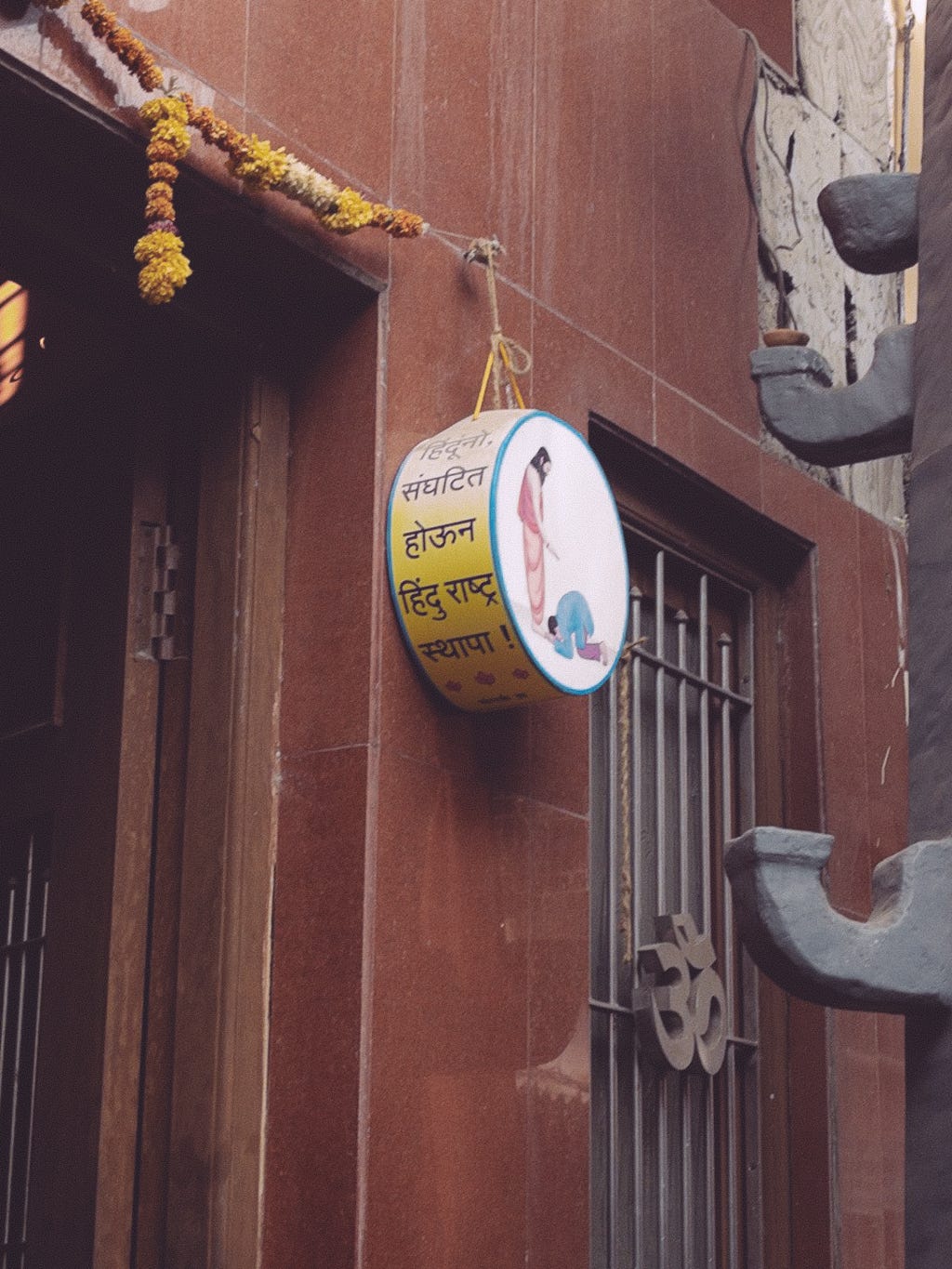
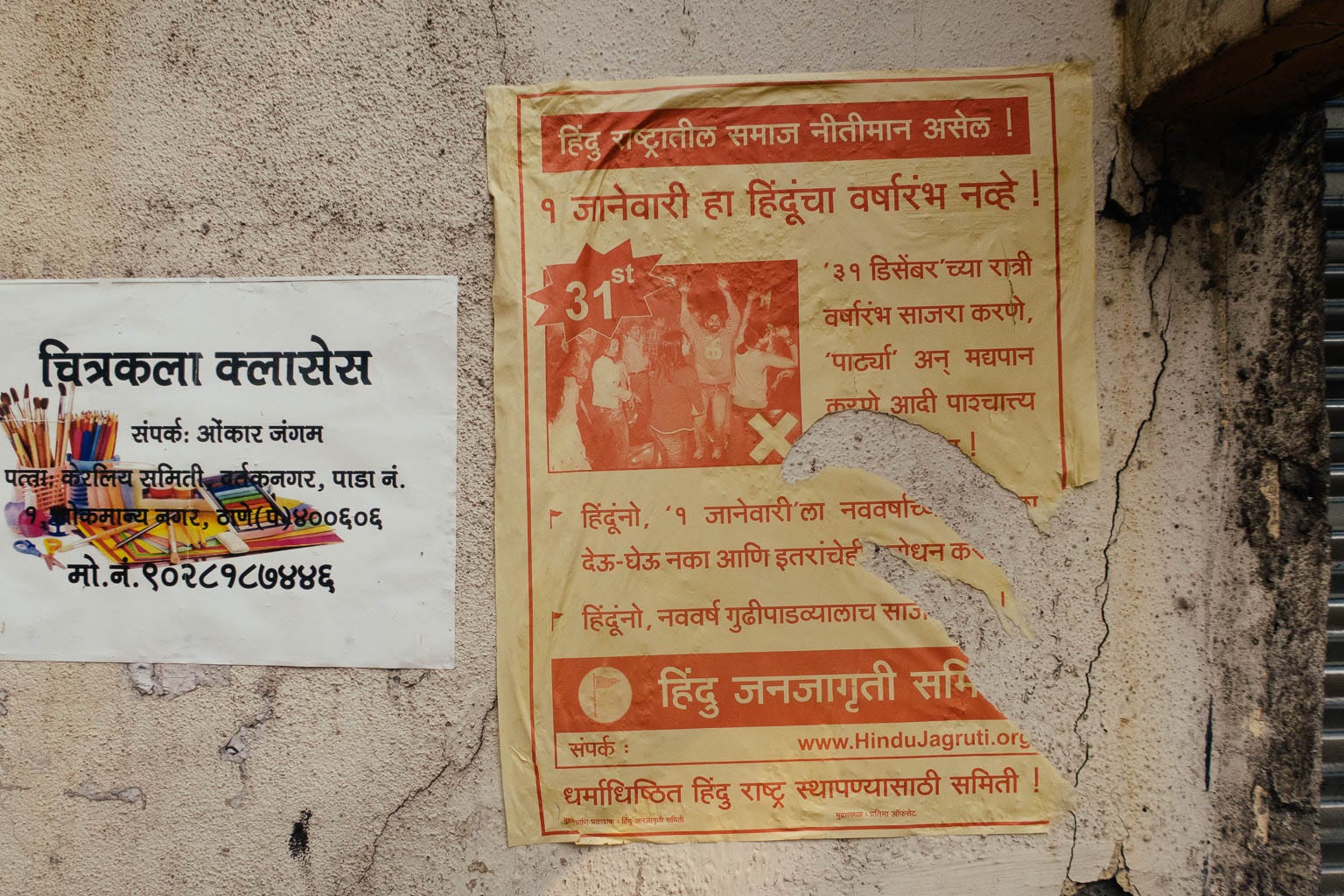
The following poster is from the group and has a darker shade of saffron. They are accused of killing rationalists Pansare, Dr Dabholkar, MM Kalburgi and Gauri Lankesh. In this poster, they ask Hindus not to celebrate New Year's Eve on December 31st.
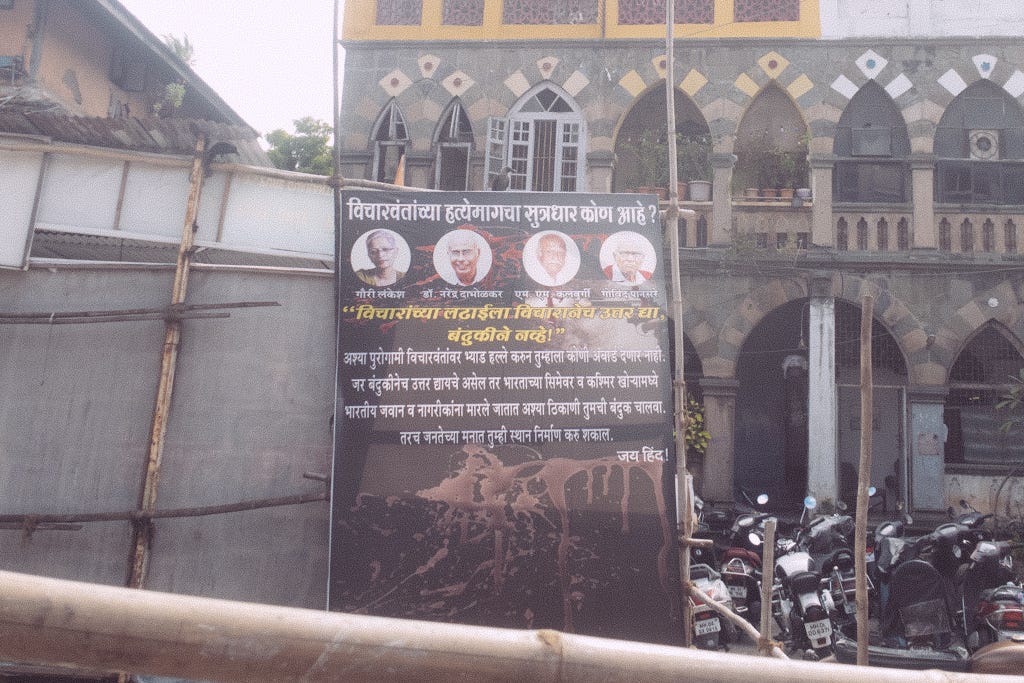
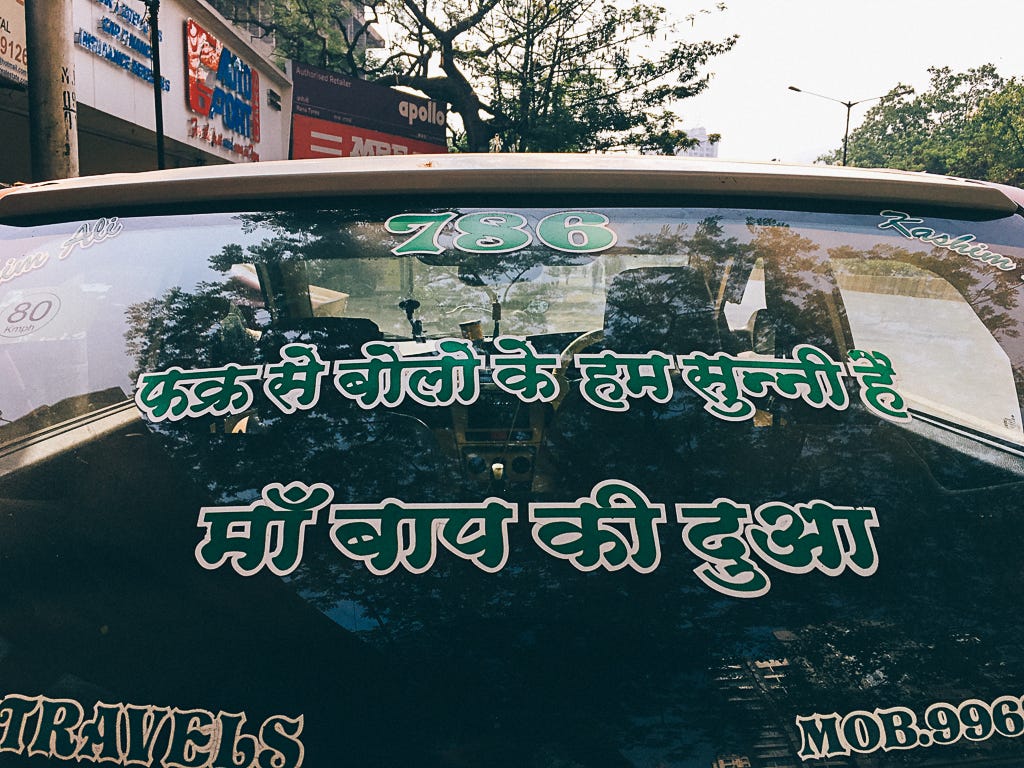
The horizontal timelines reflect almost every imaginable event, external and internal. These stickers targeted shopkeepers in Mumbai and were pasted across markets.
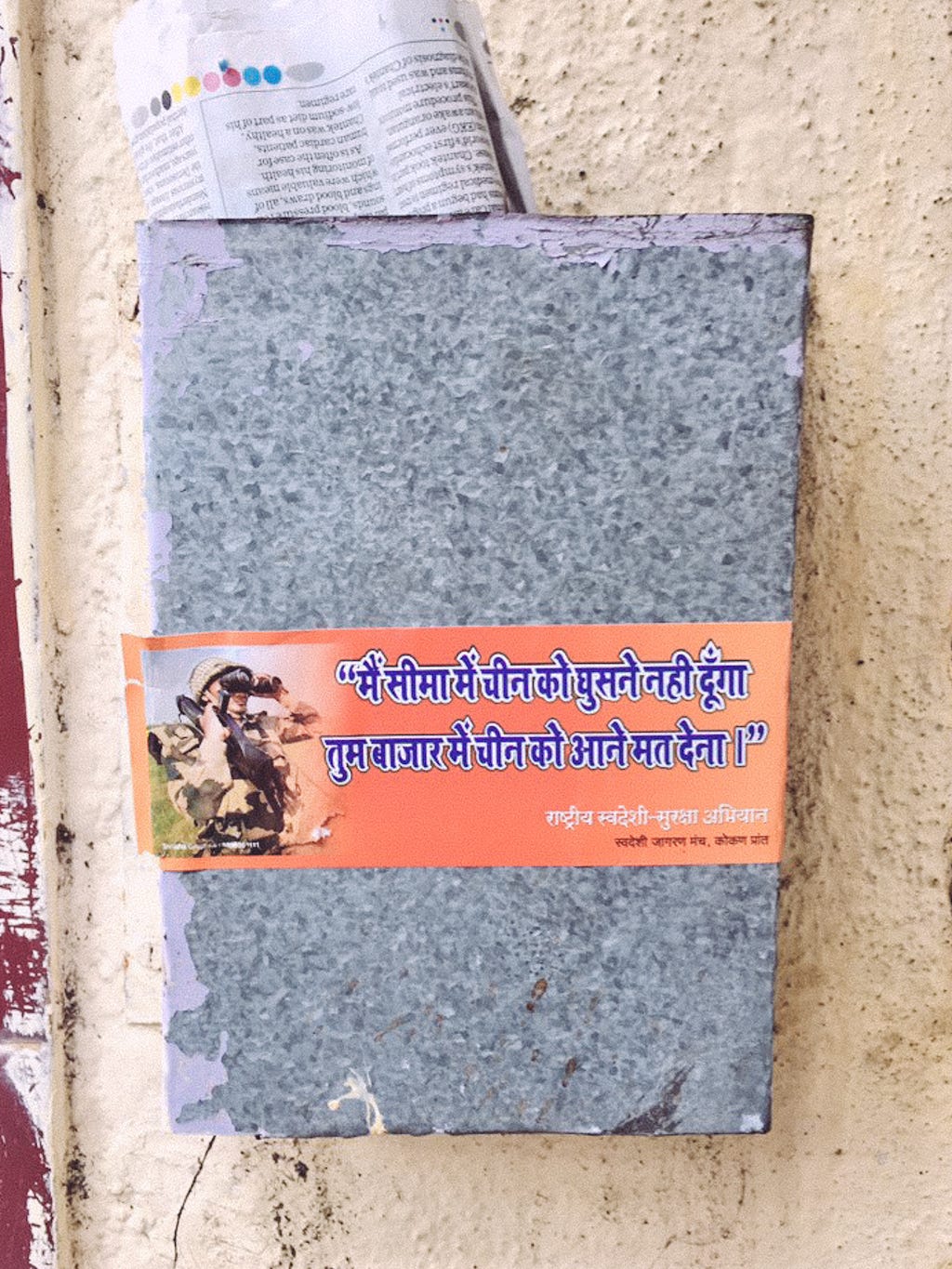
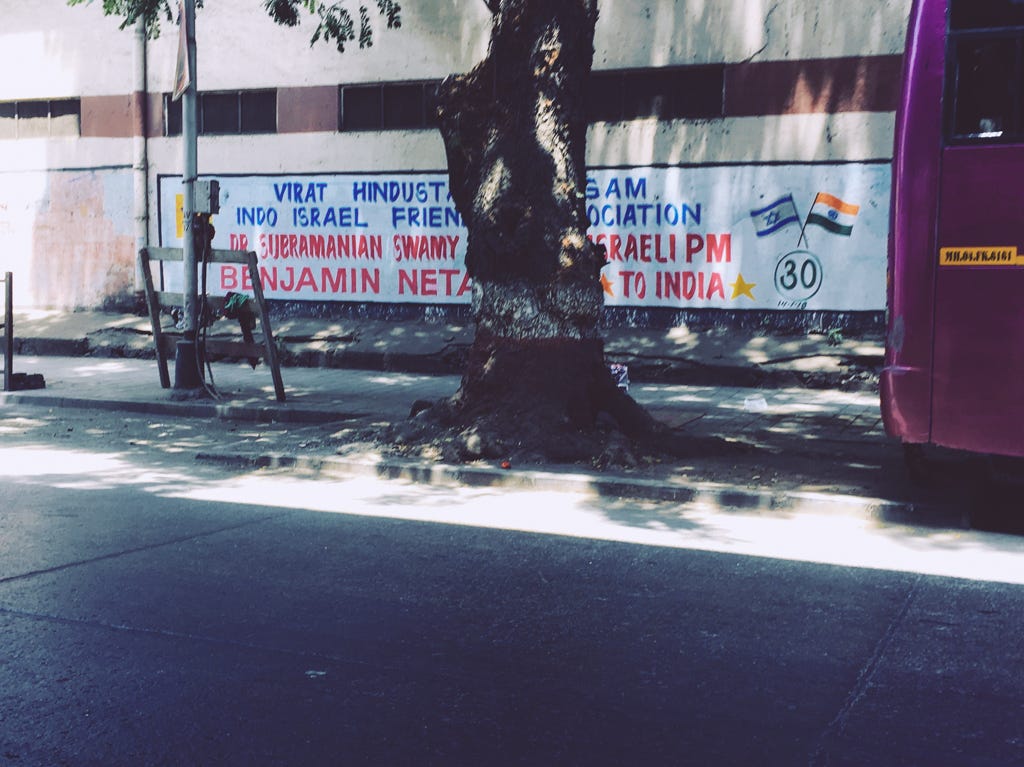
This should give us an idea of the right-wing worldview in India.
Wow..this article..these images are truly eye opening
Very nice!